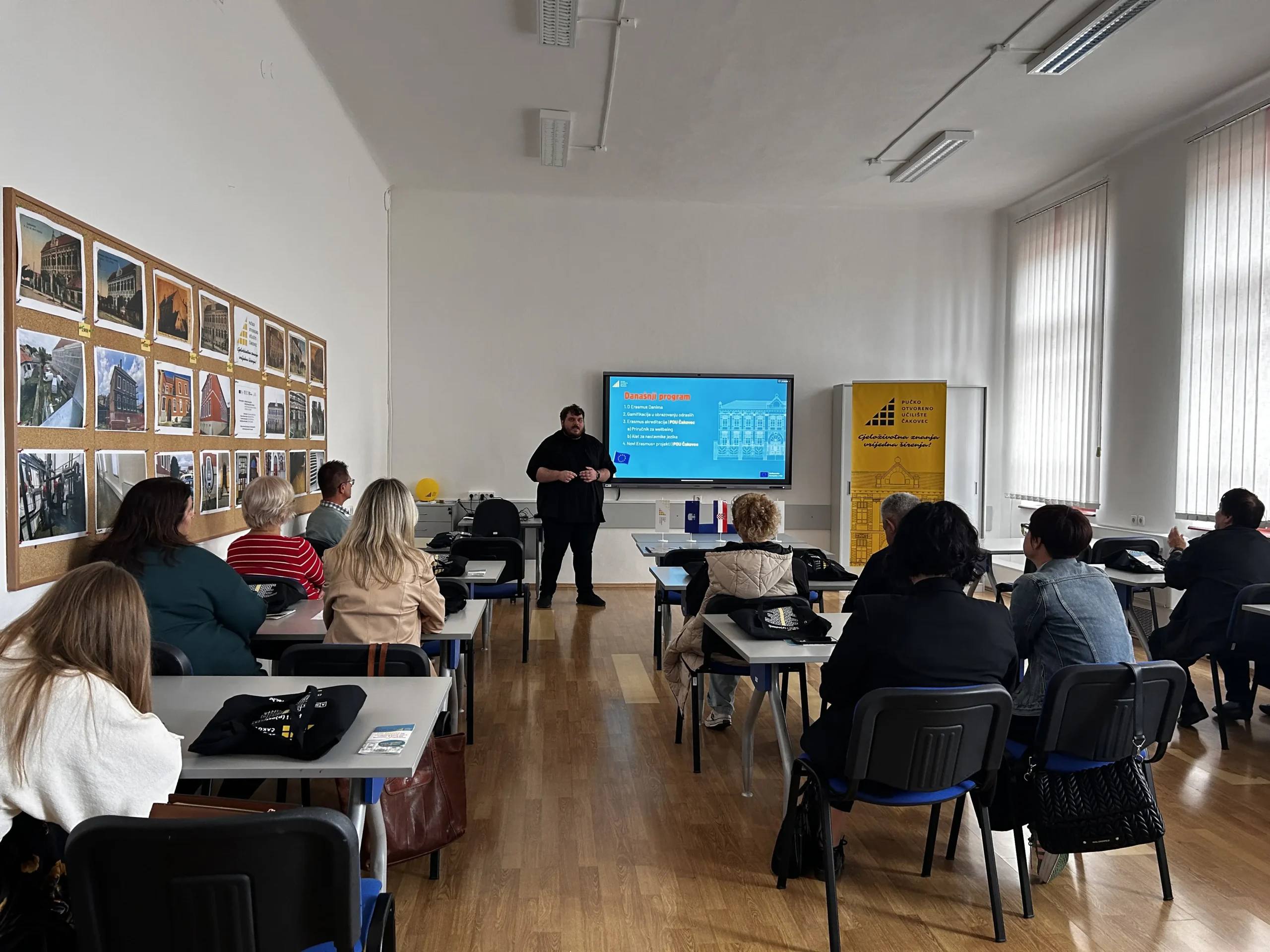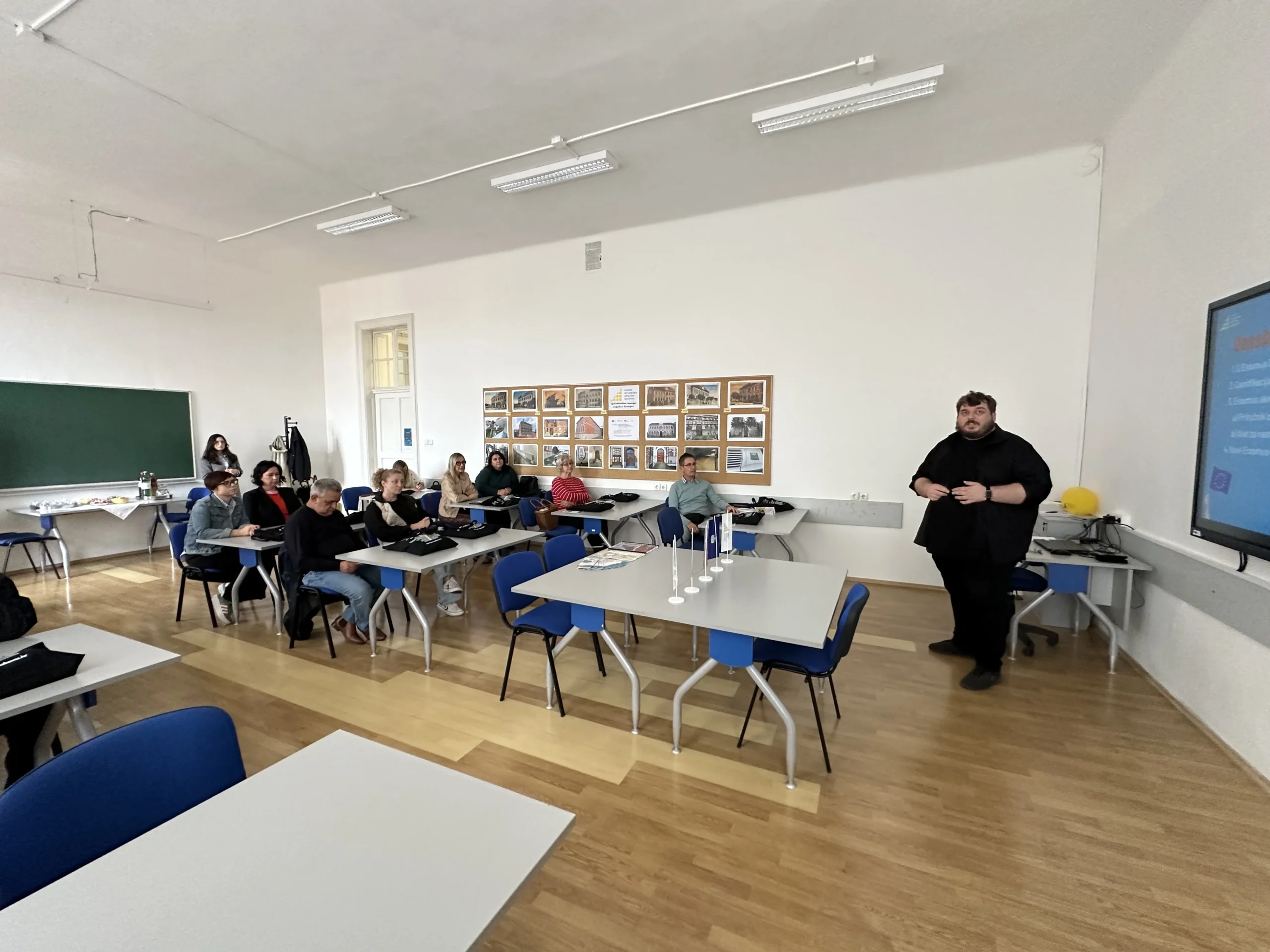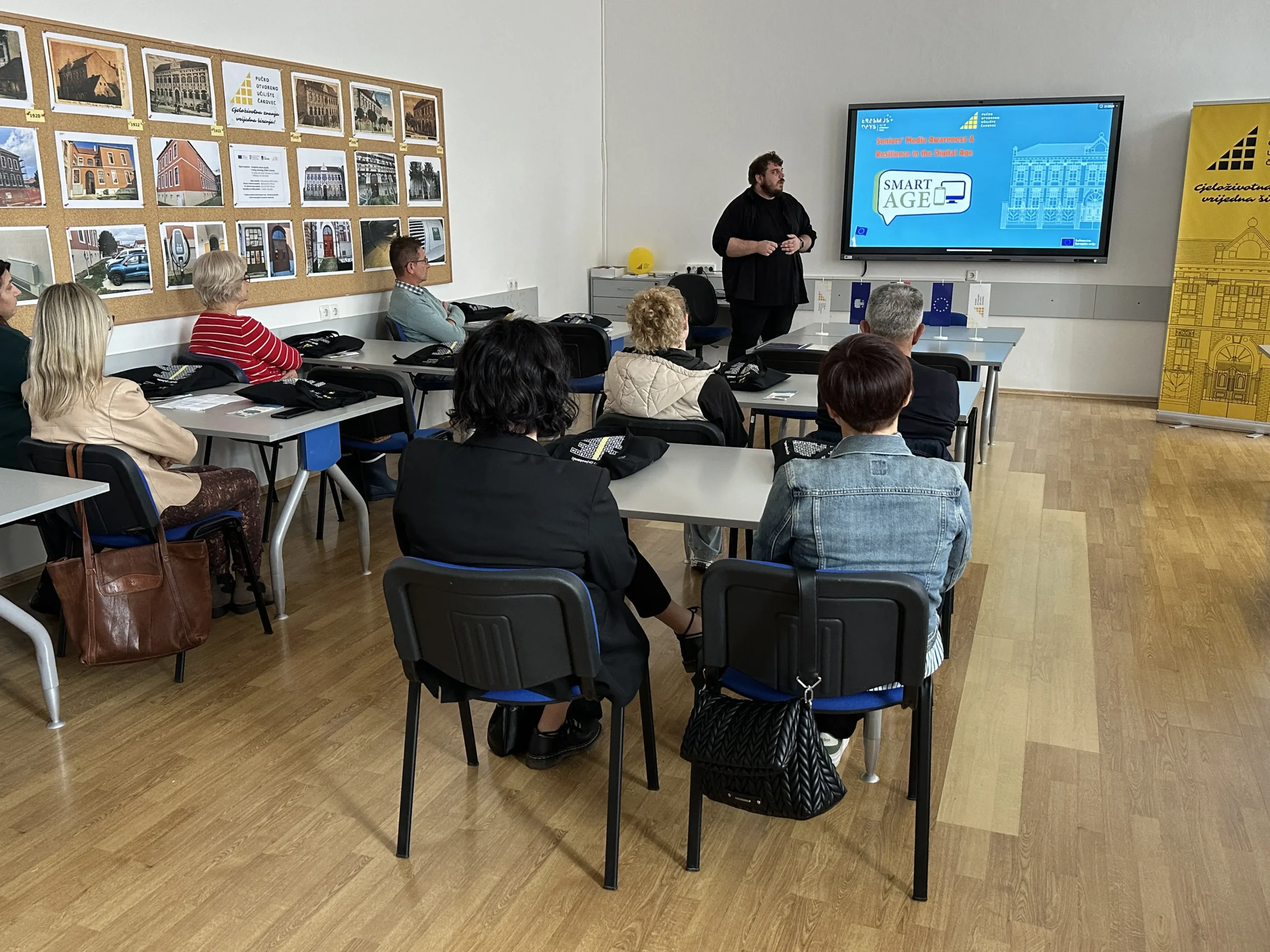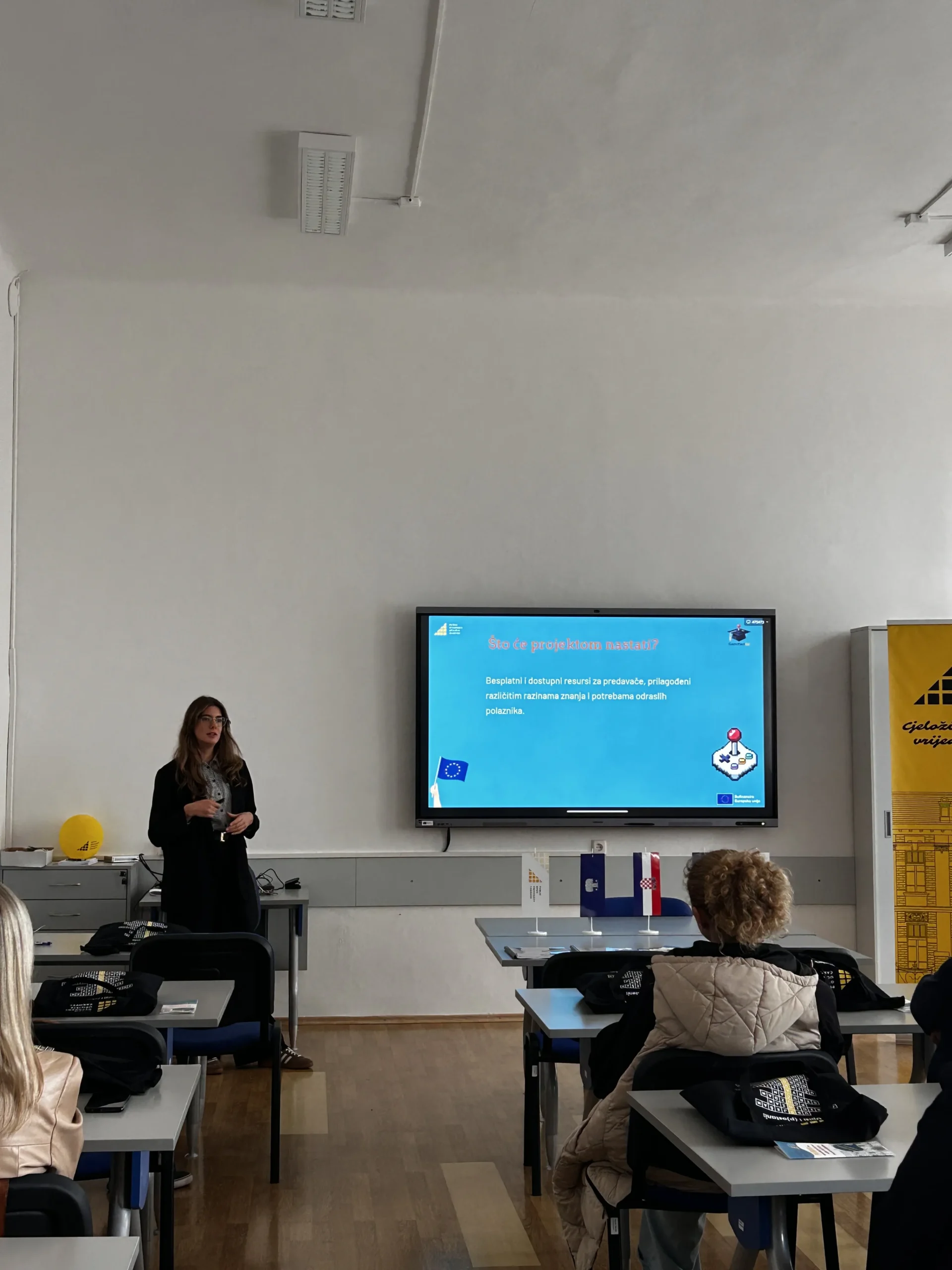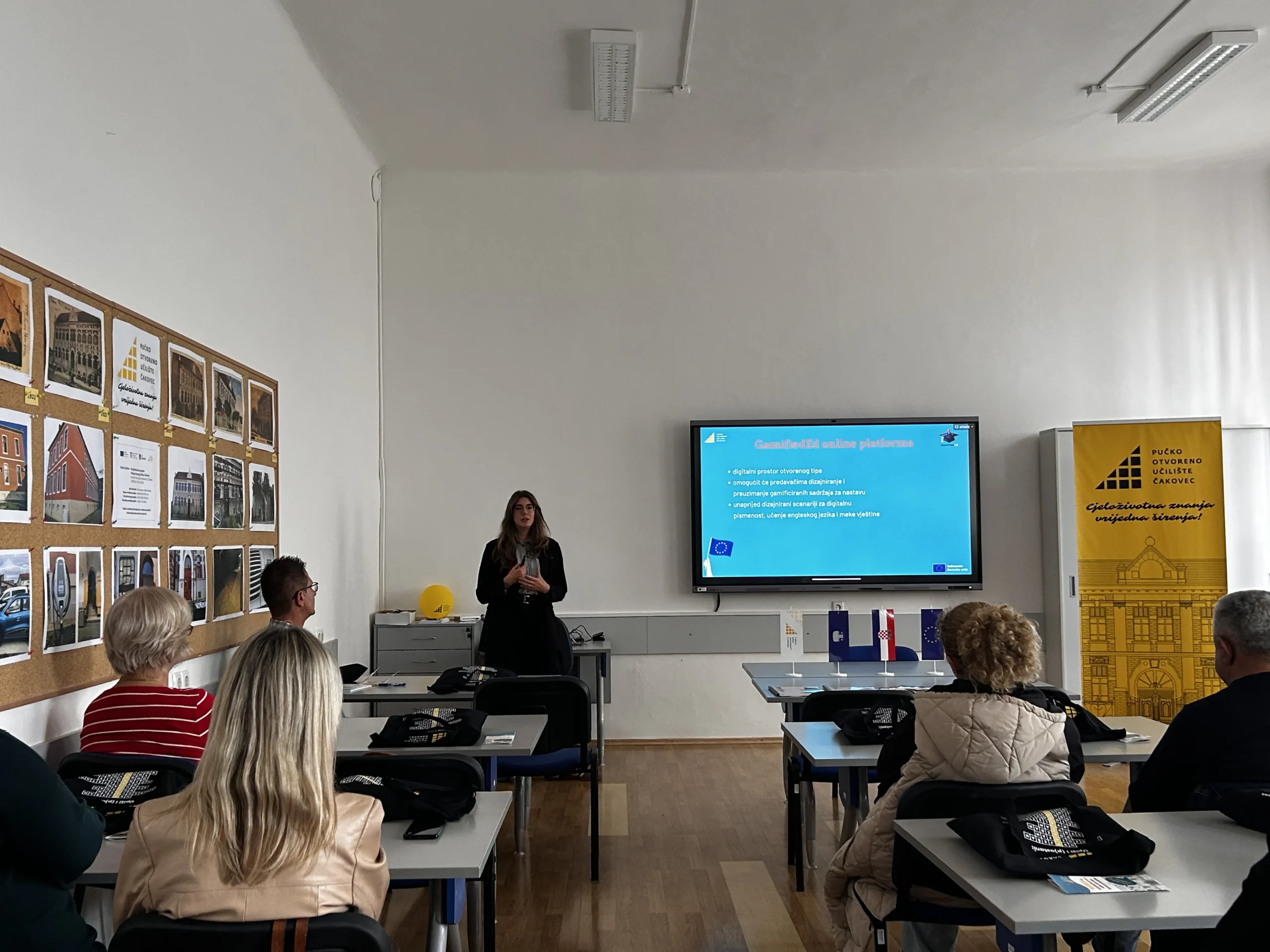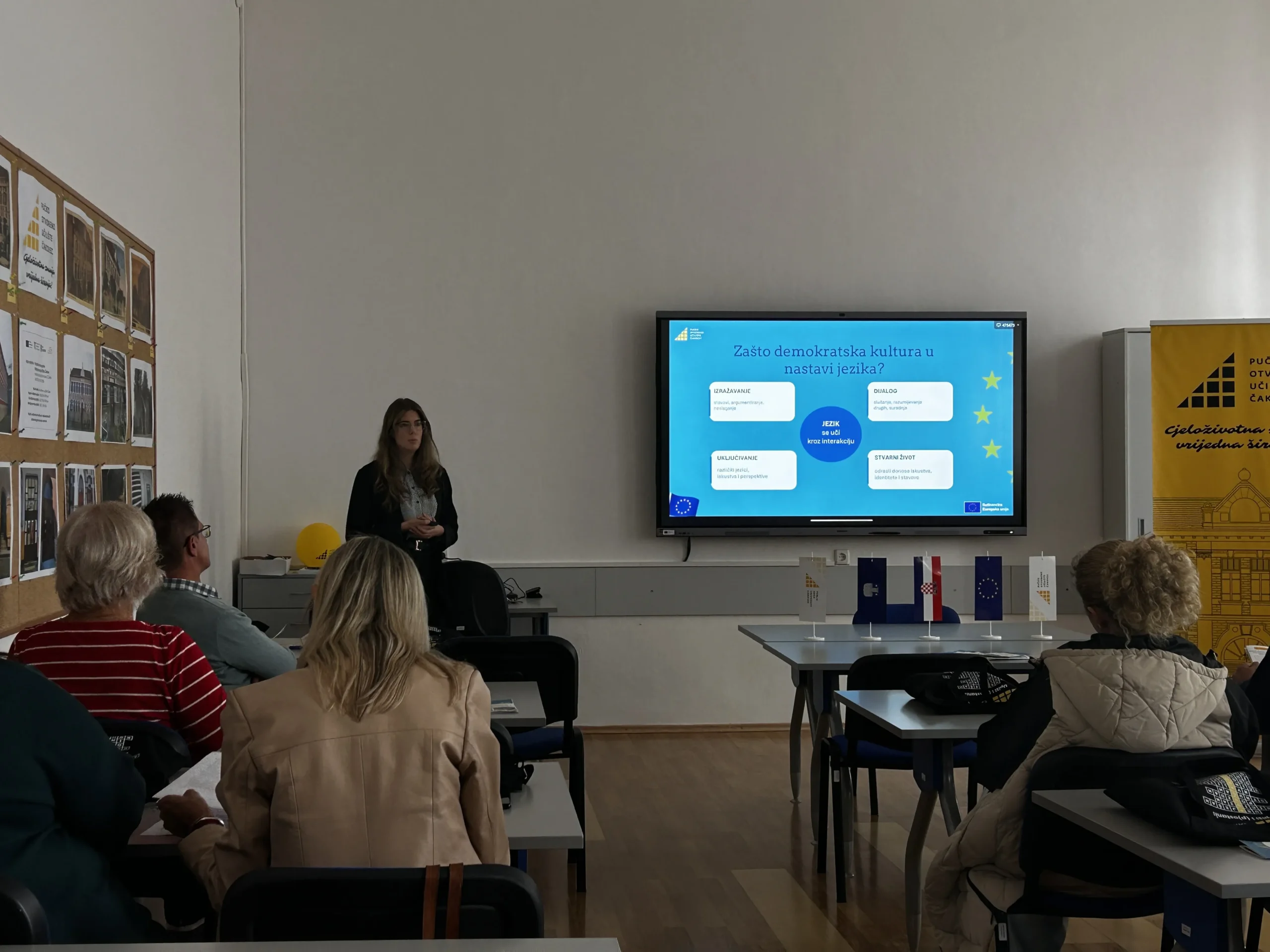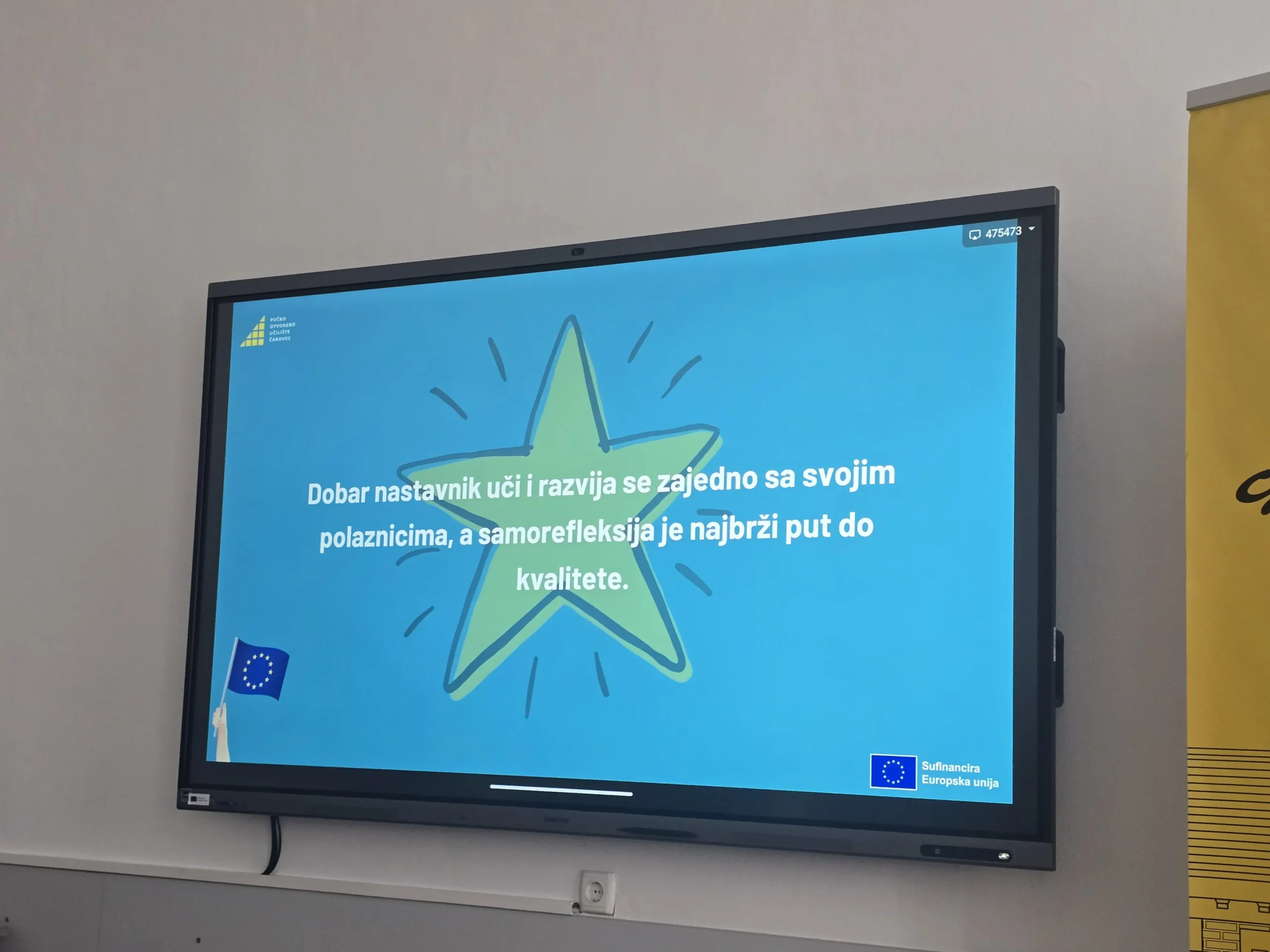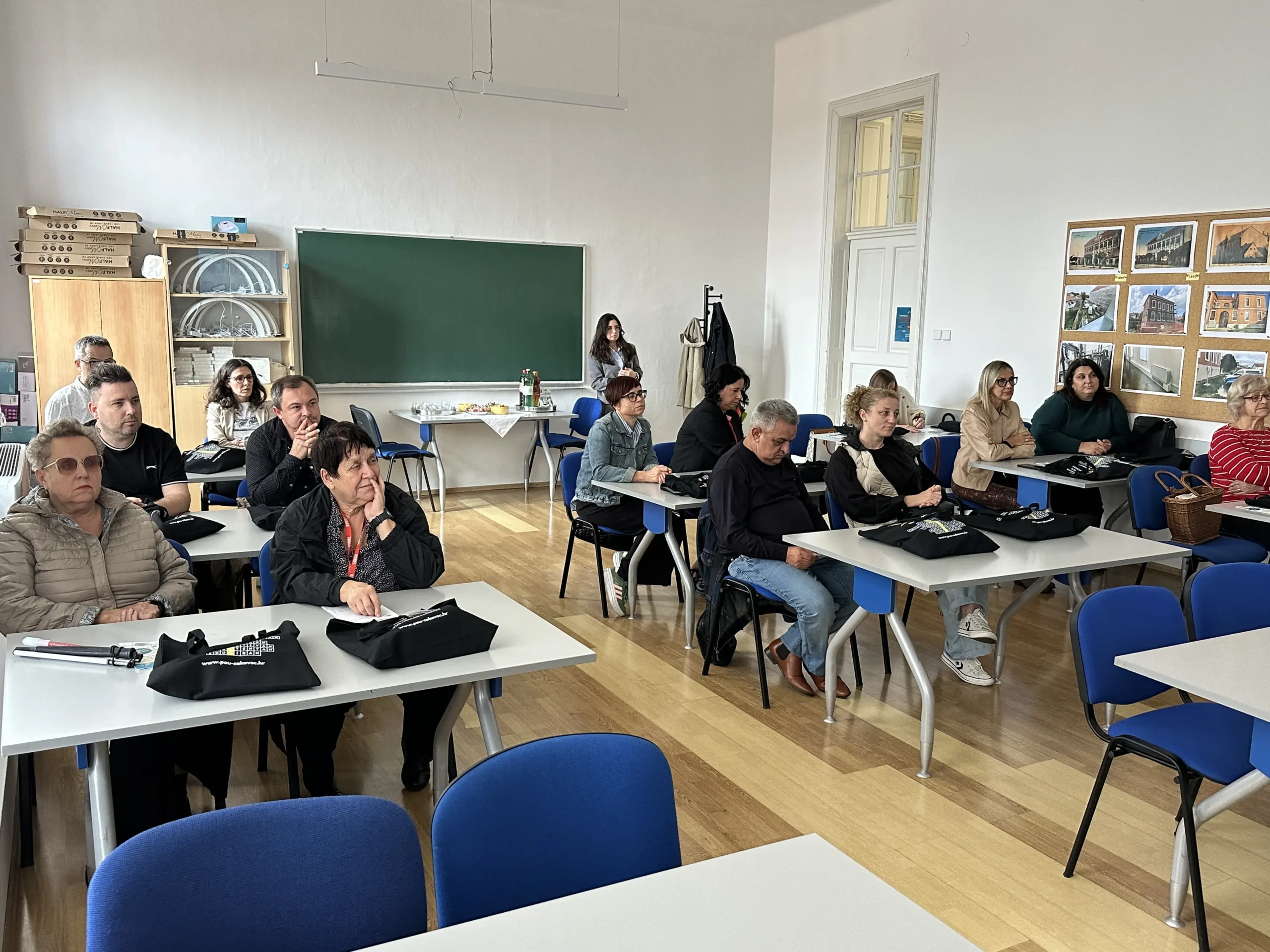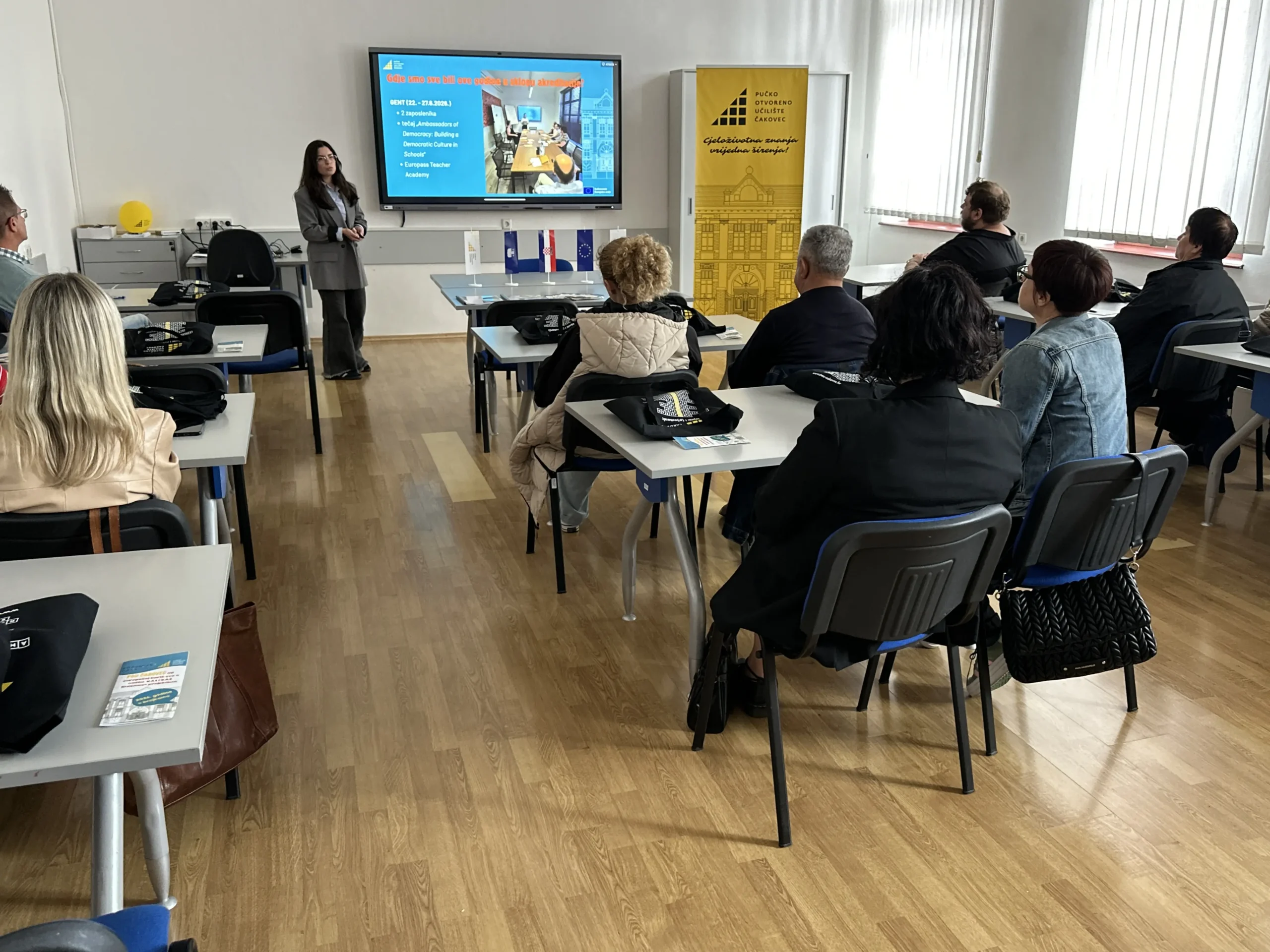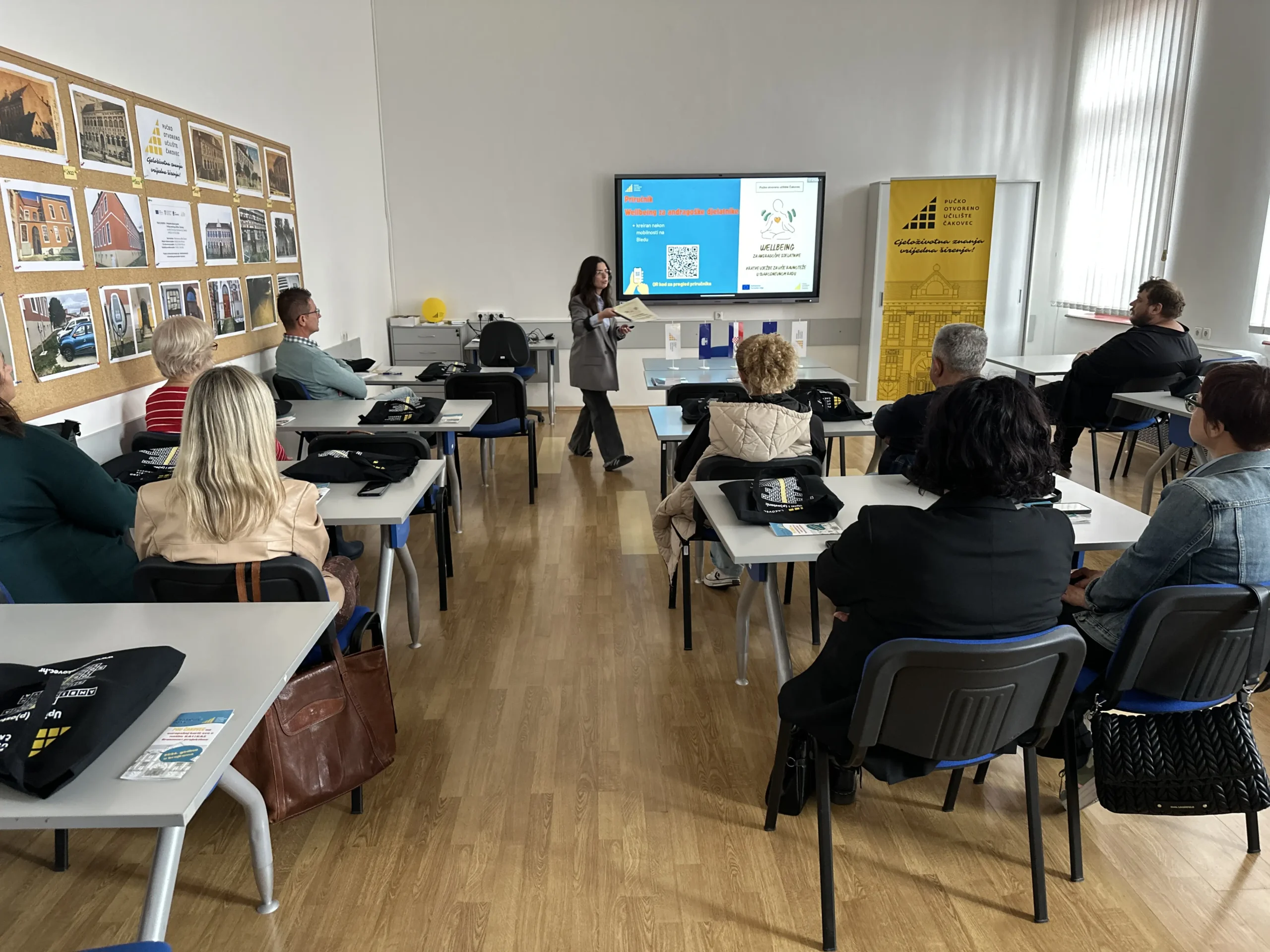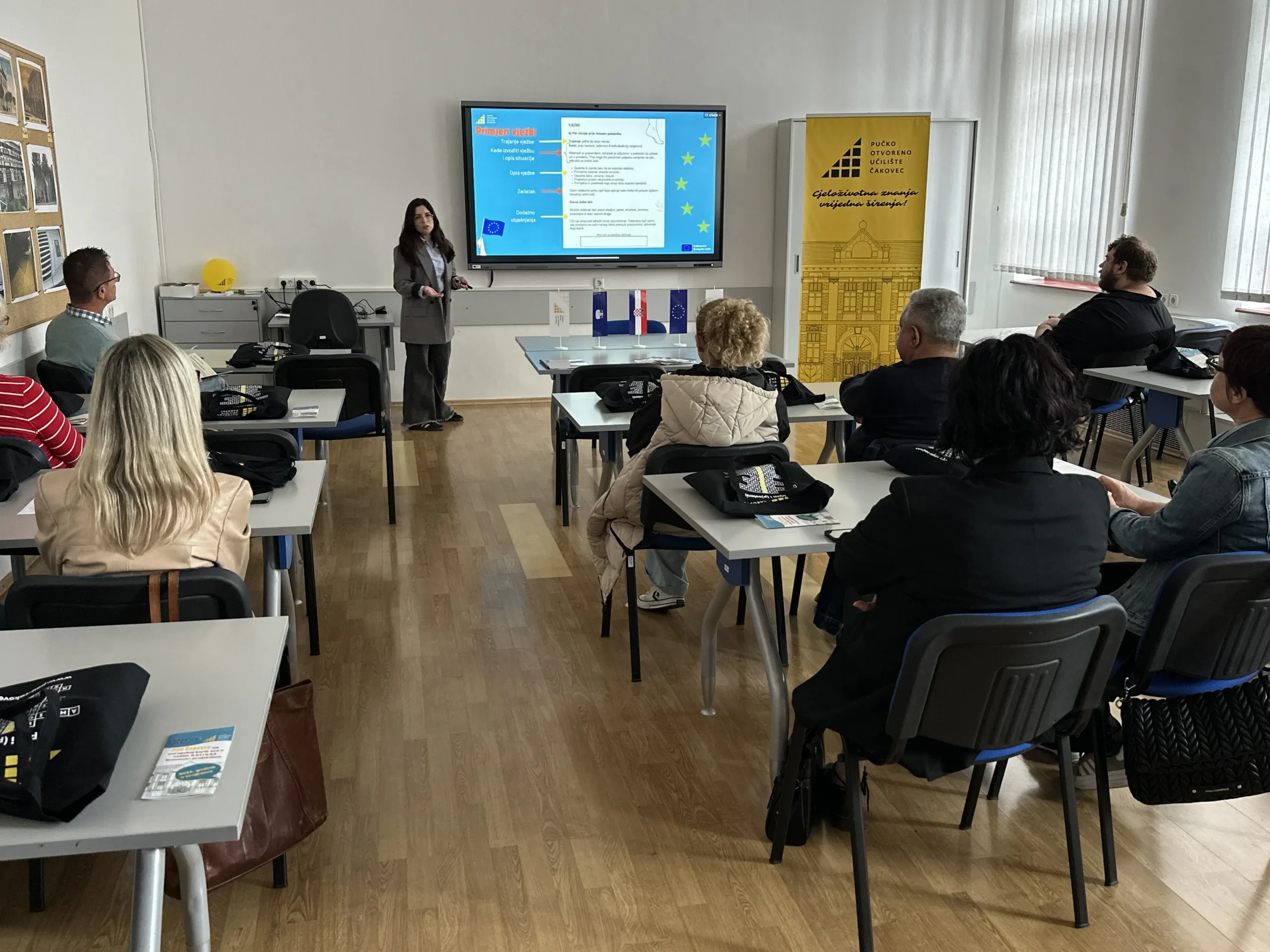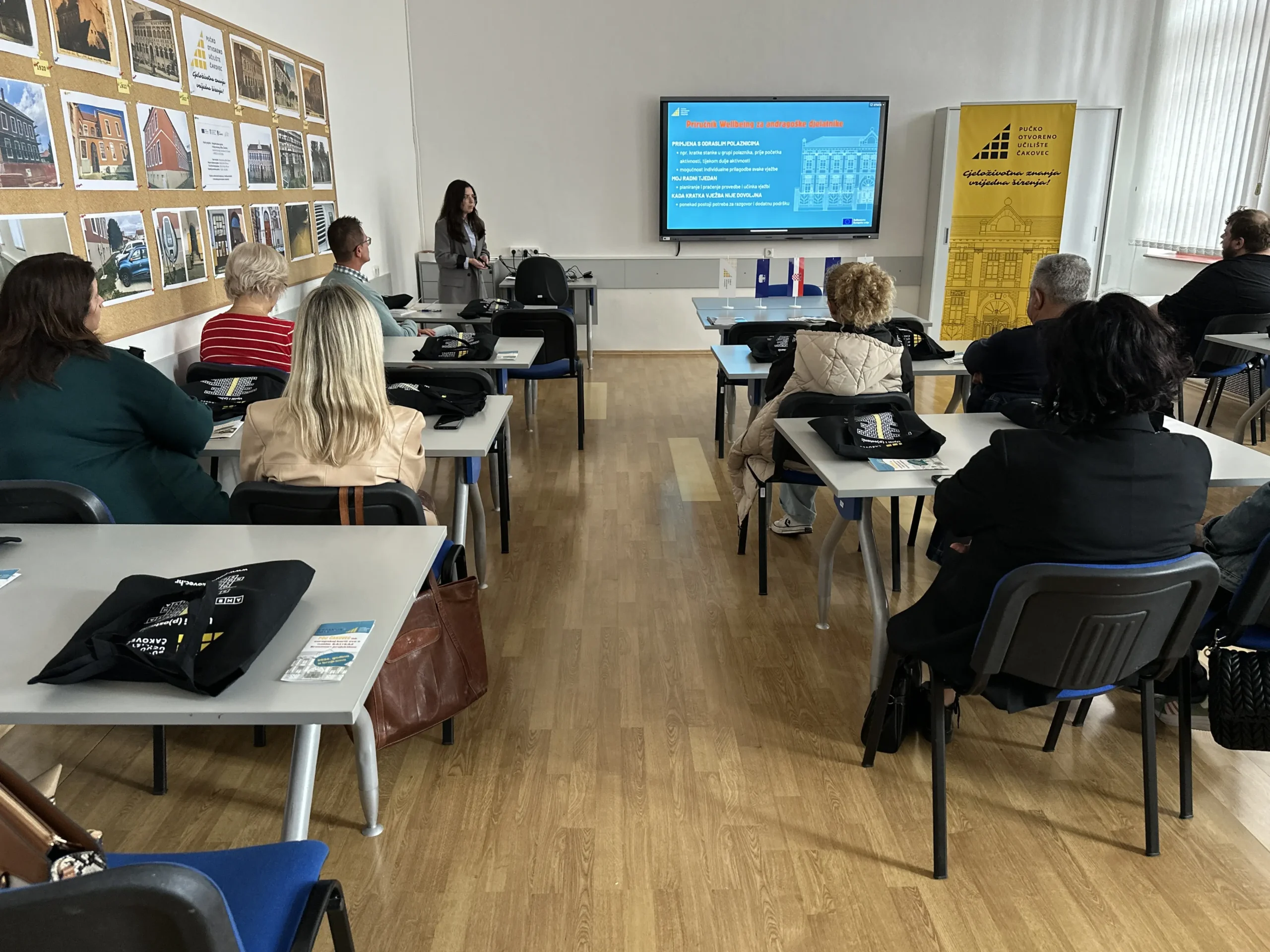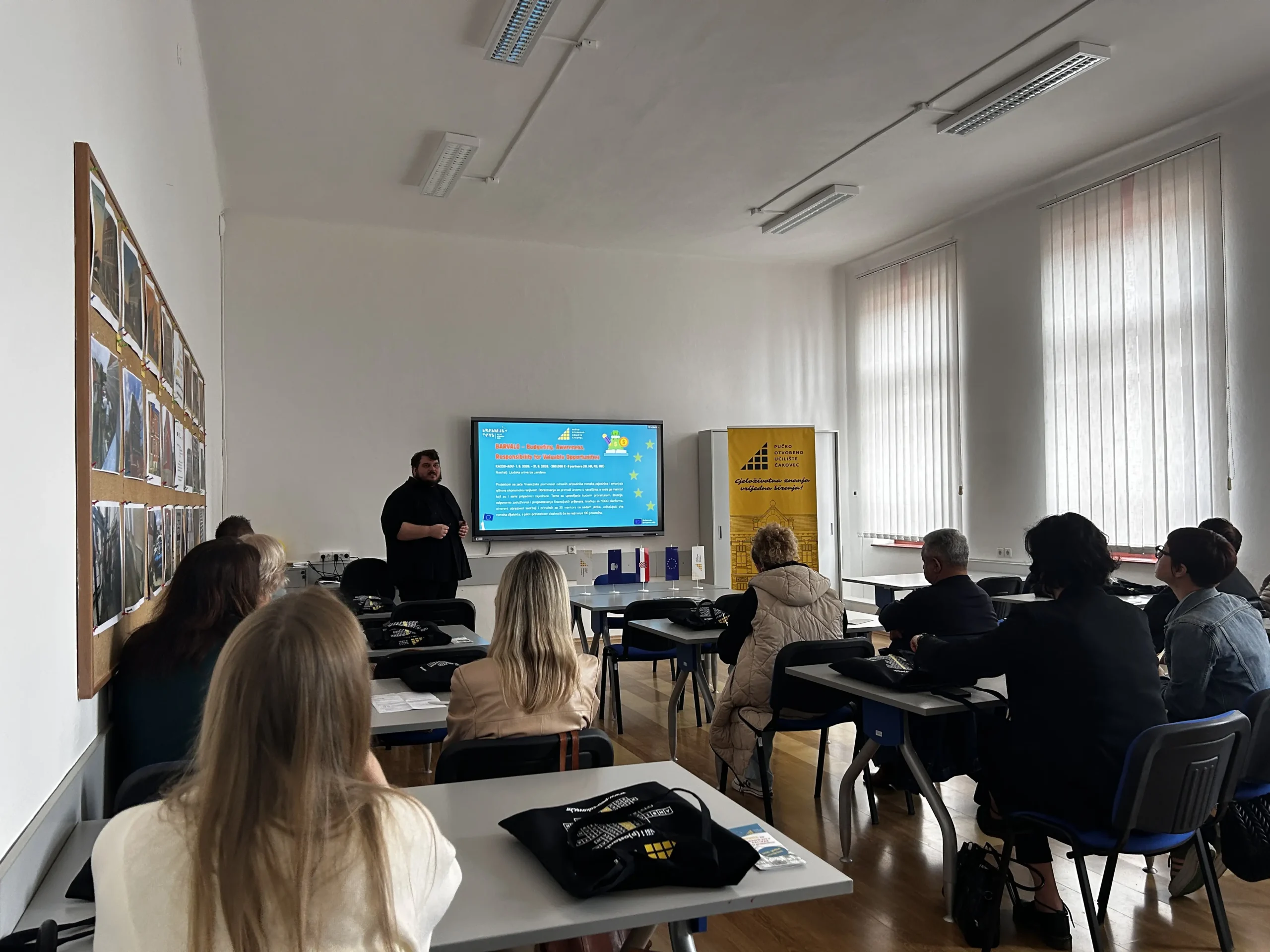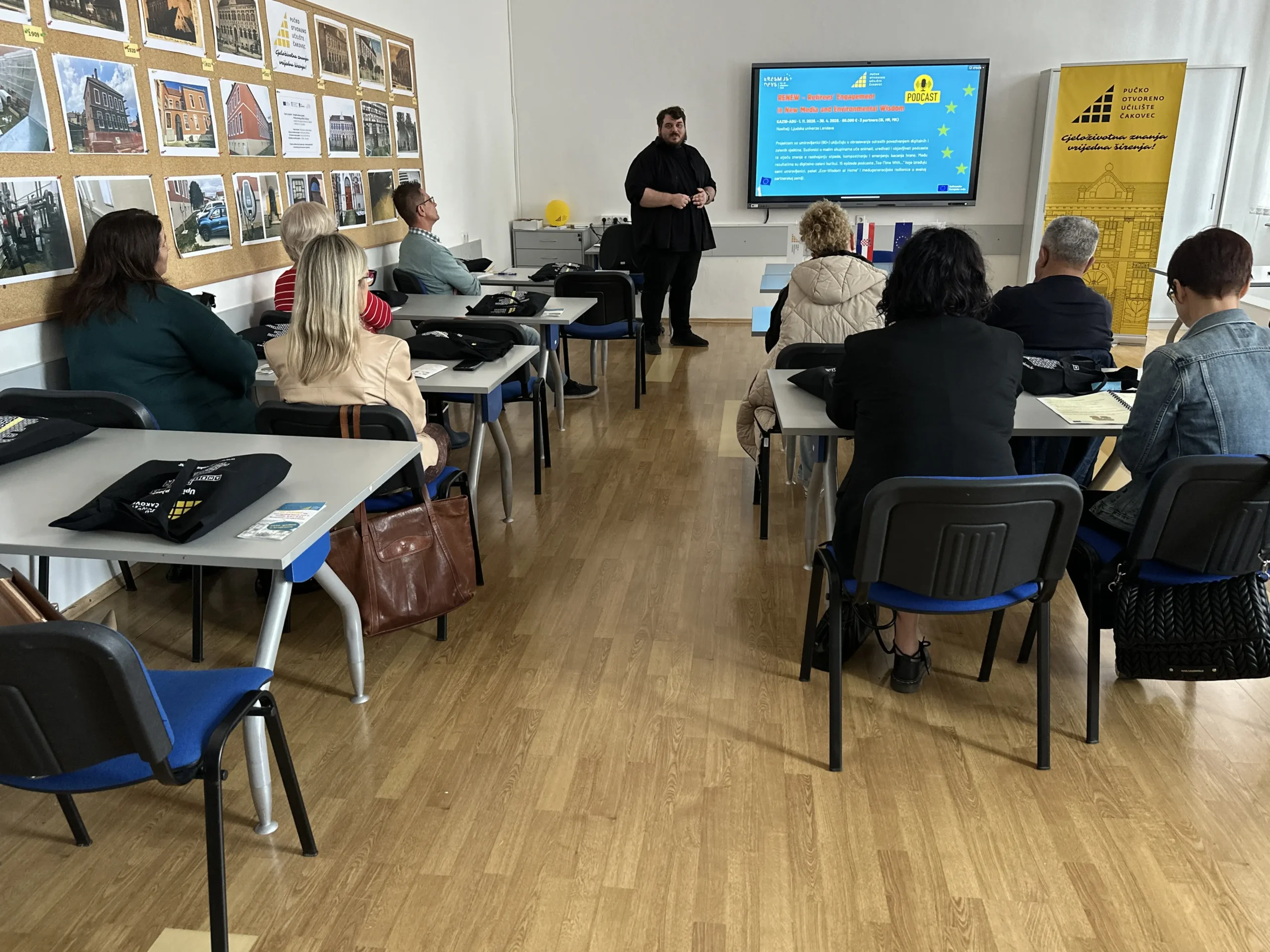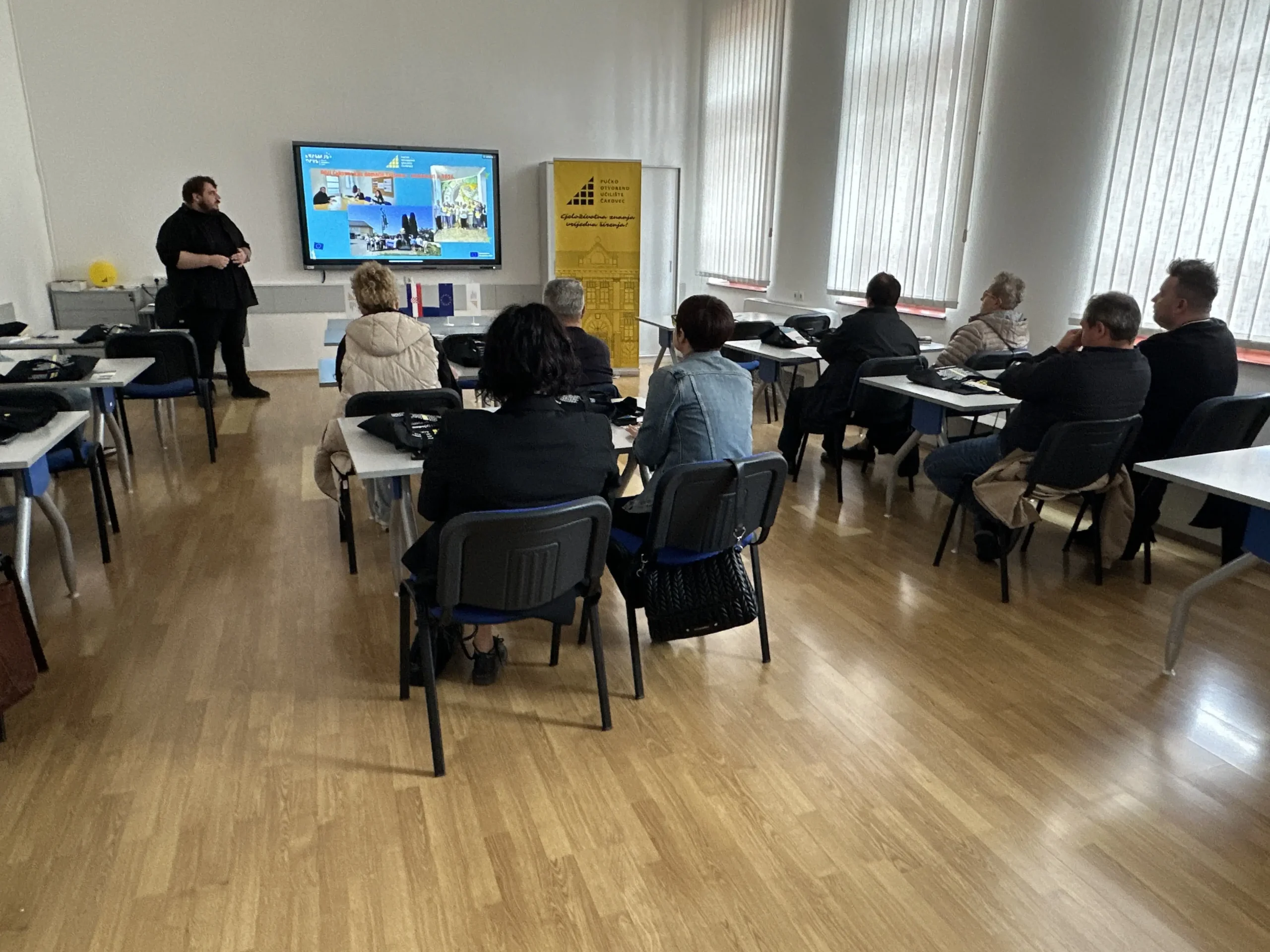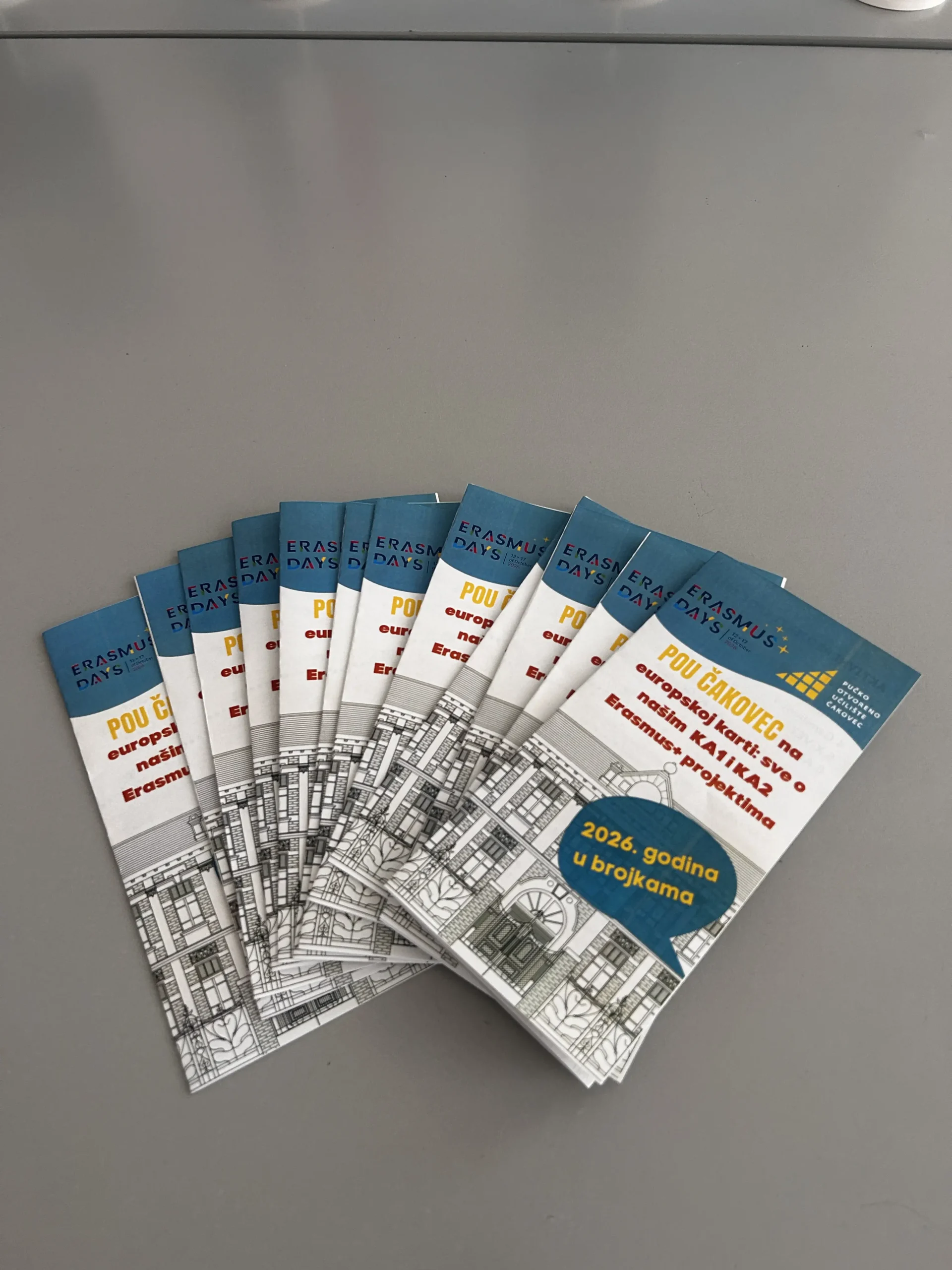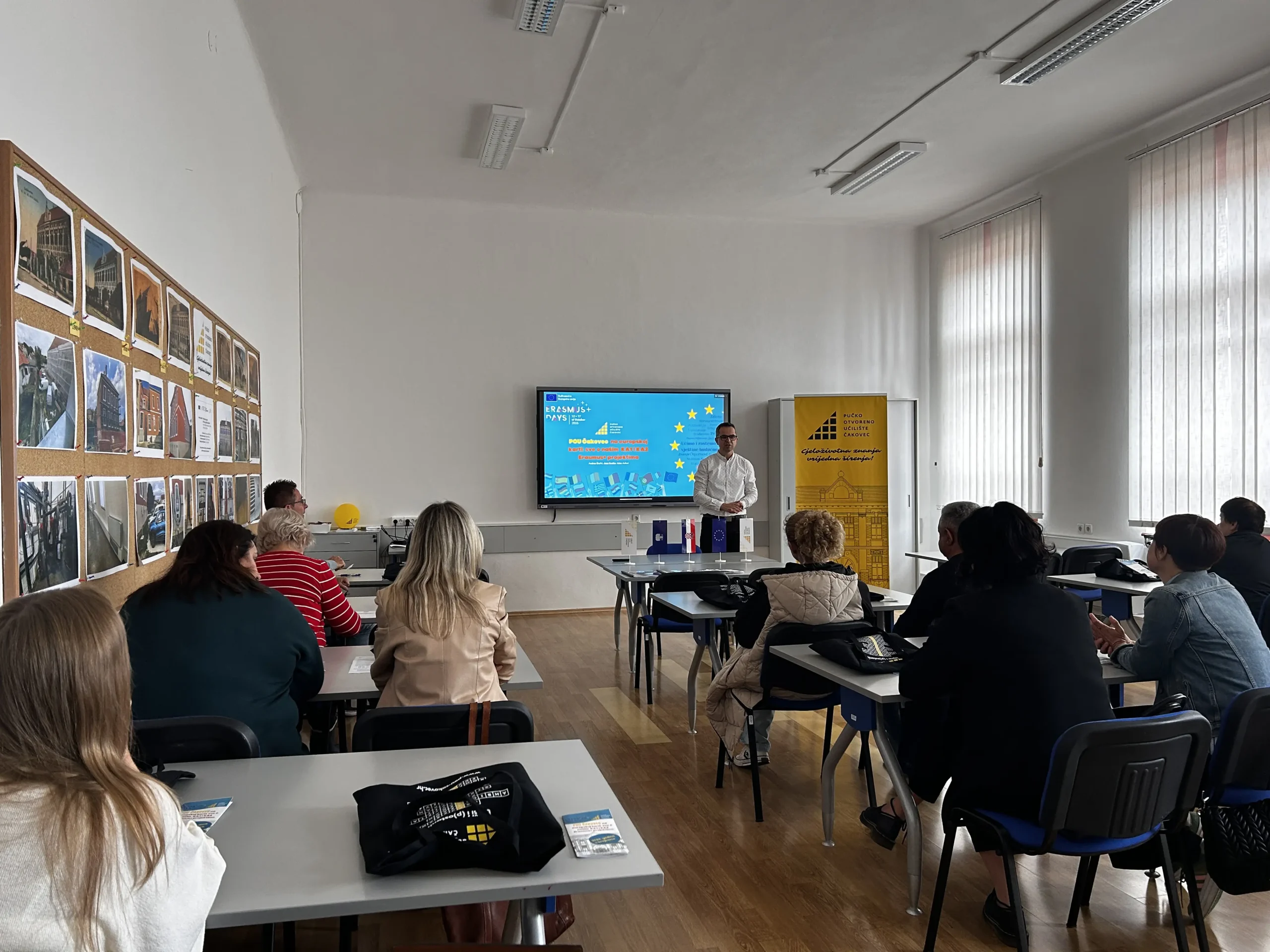
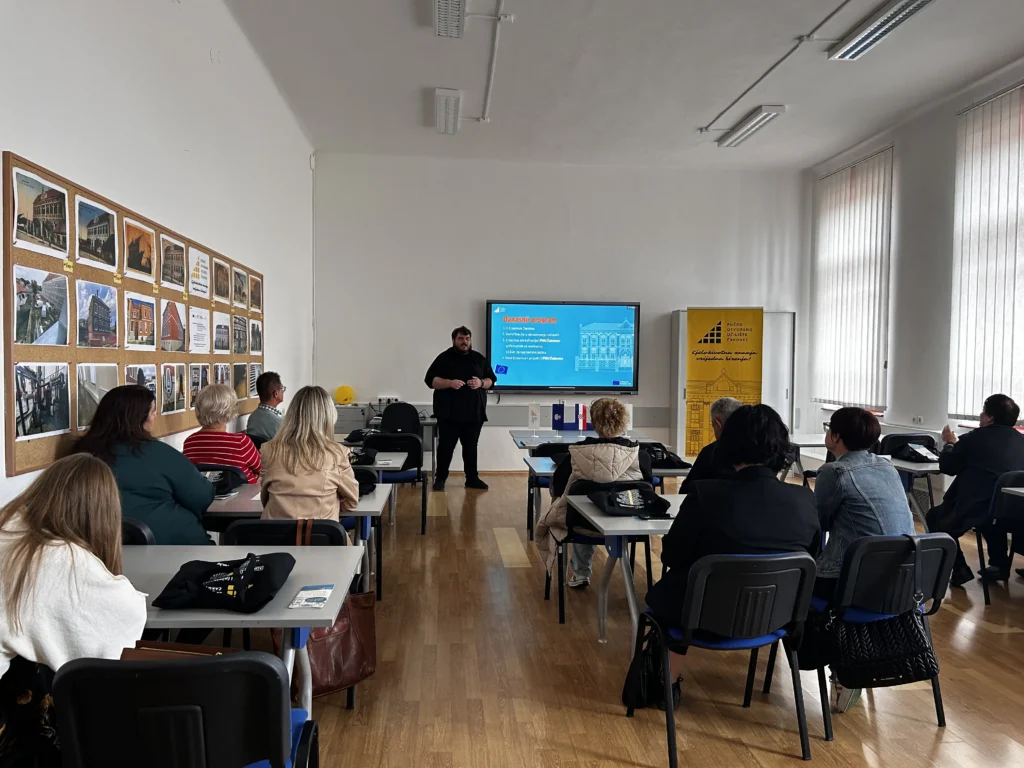
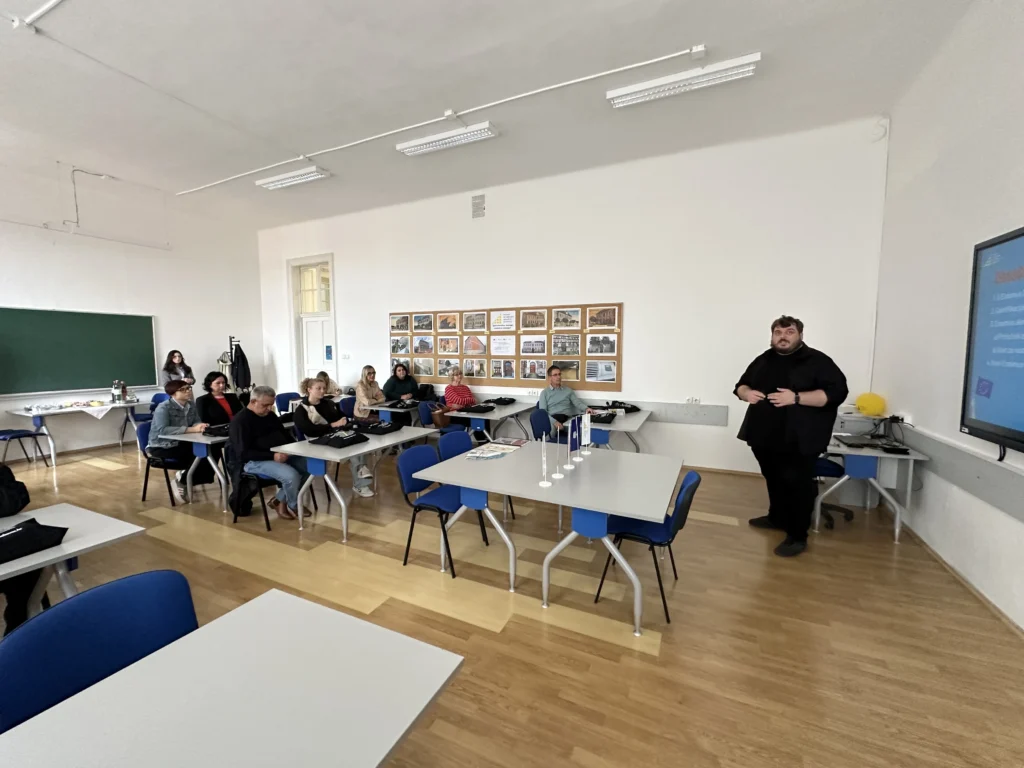
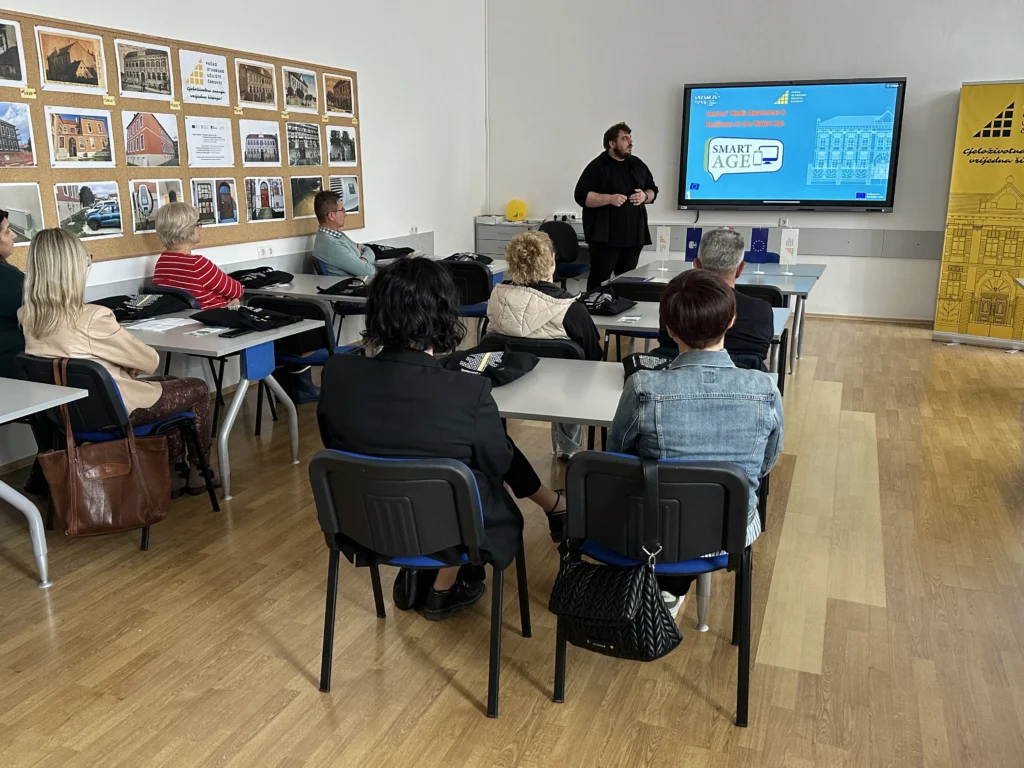
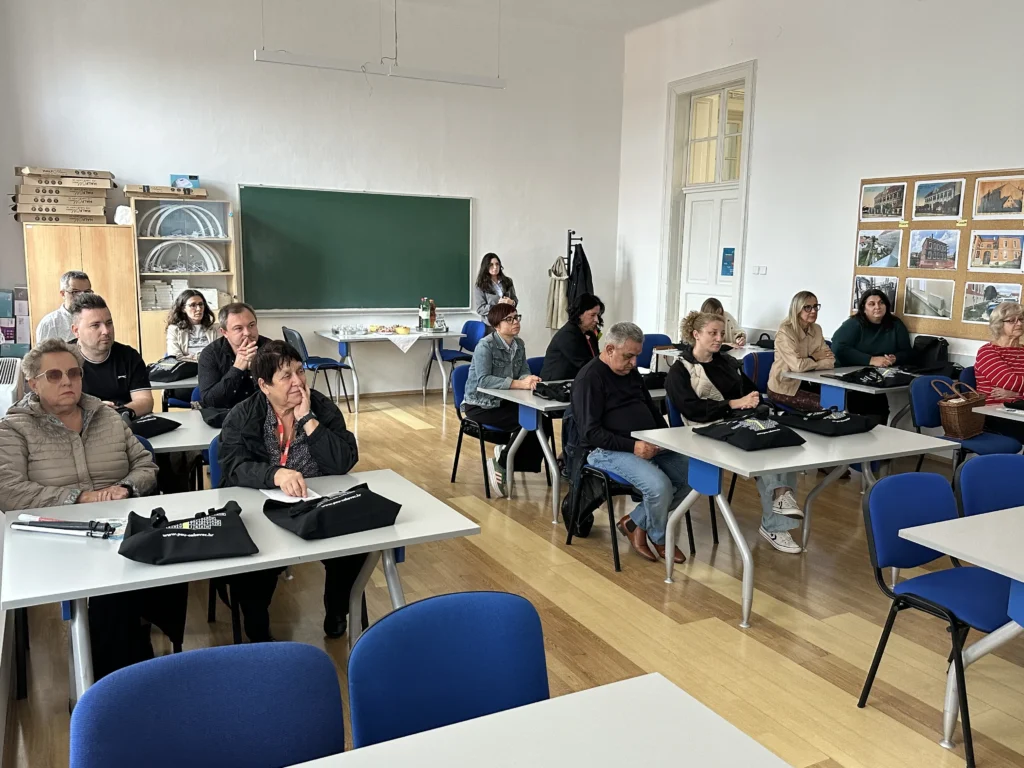
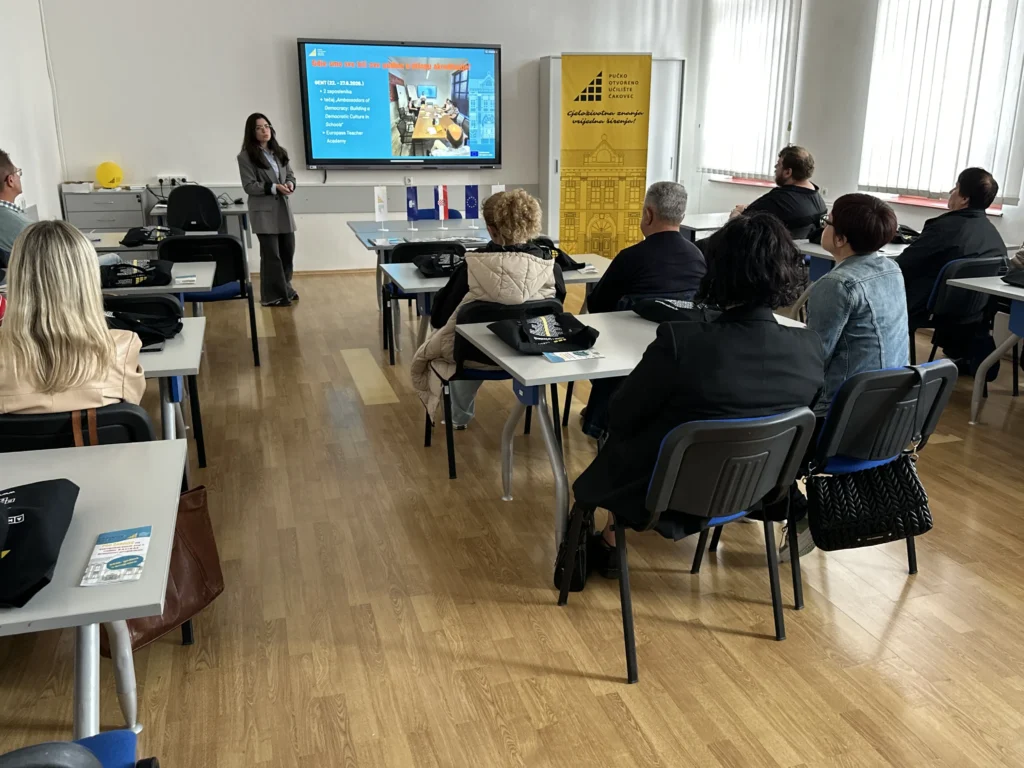
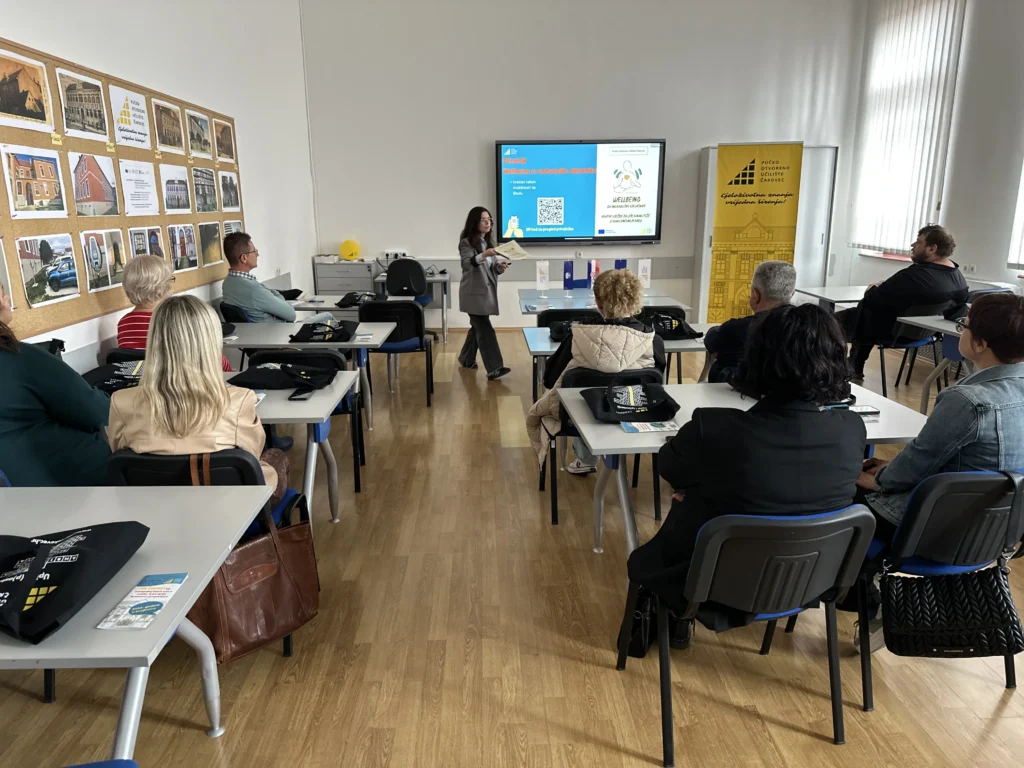
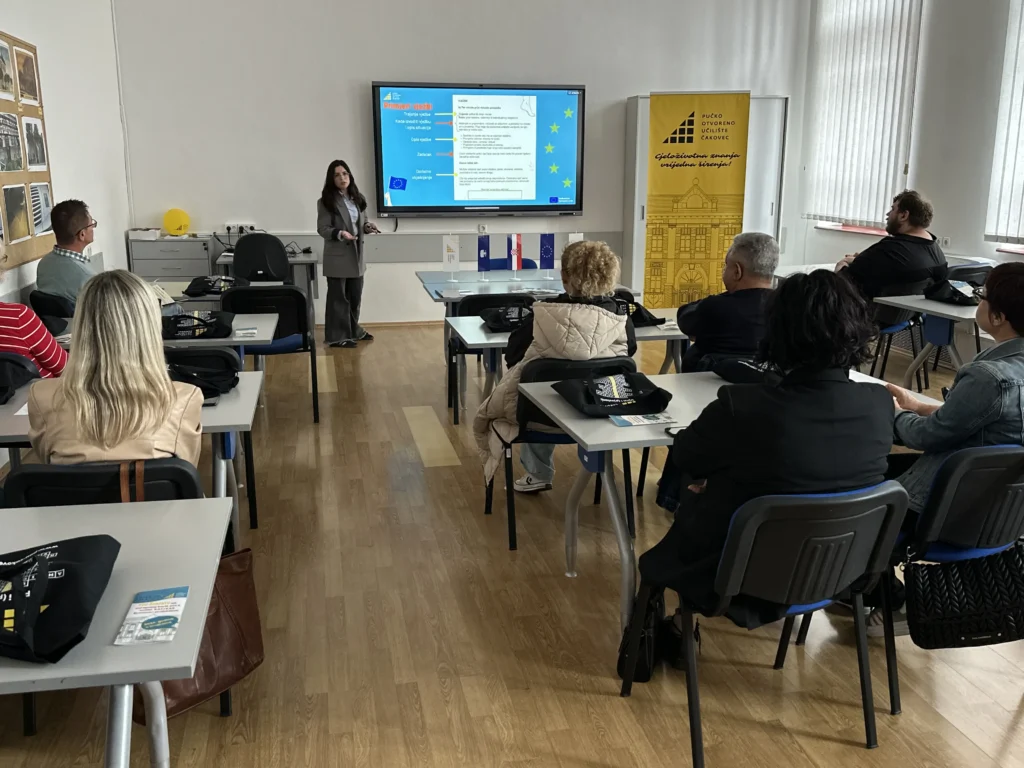
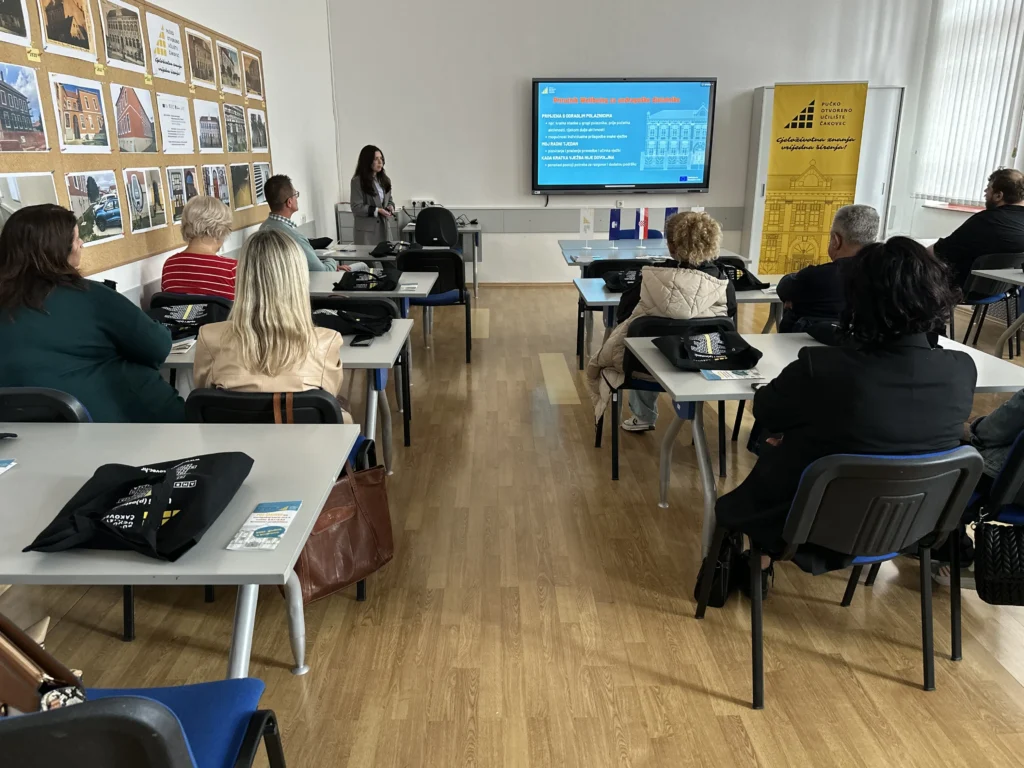
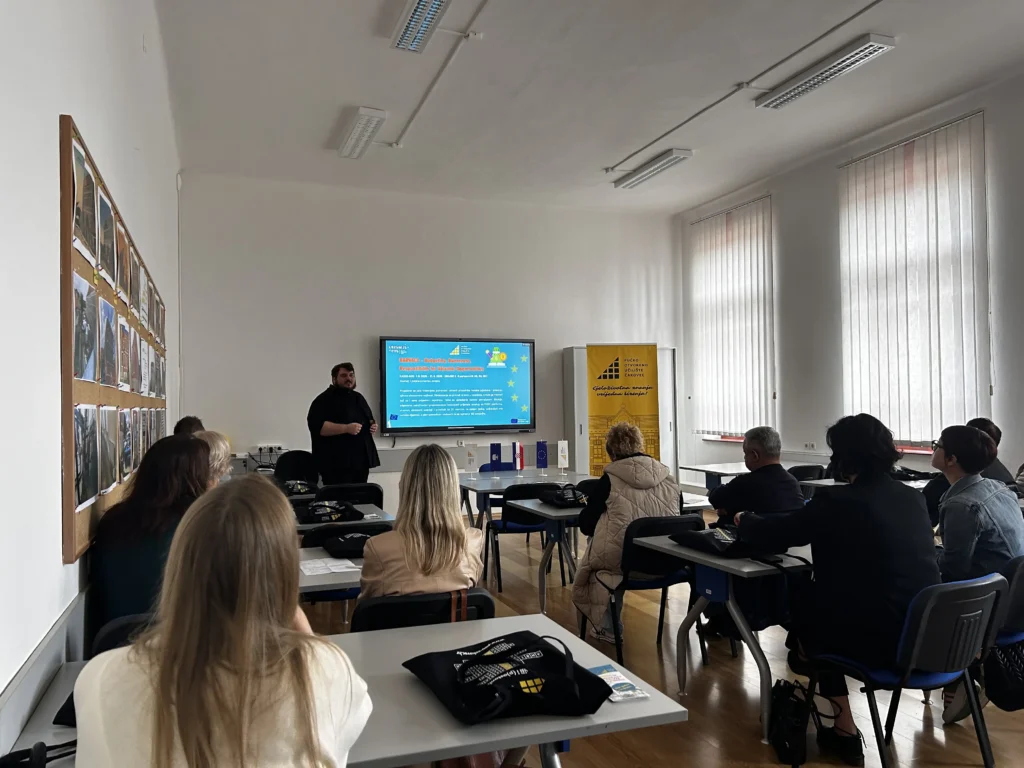
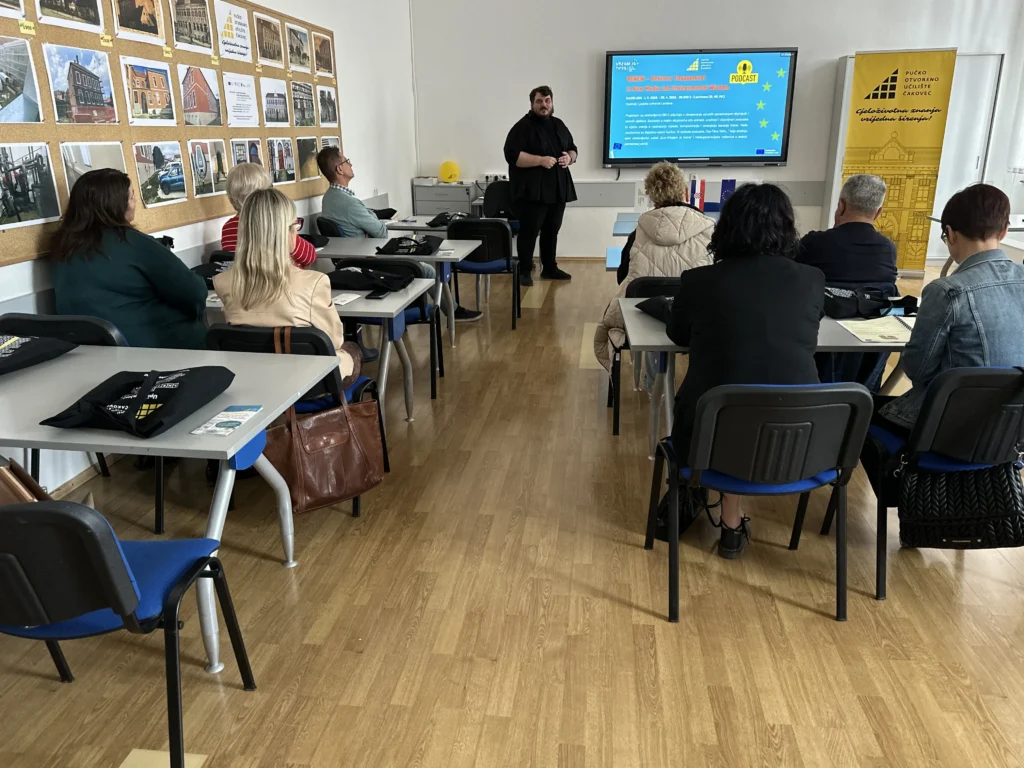
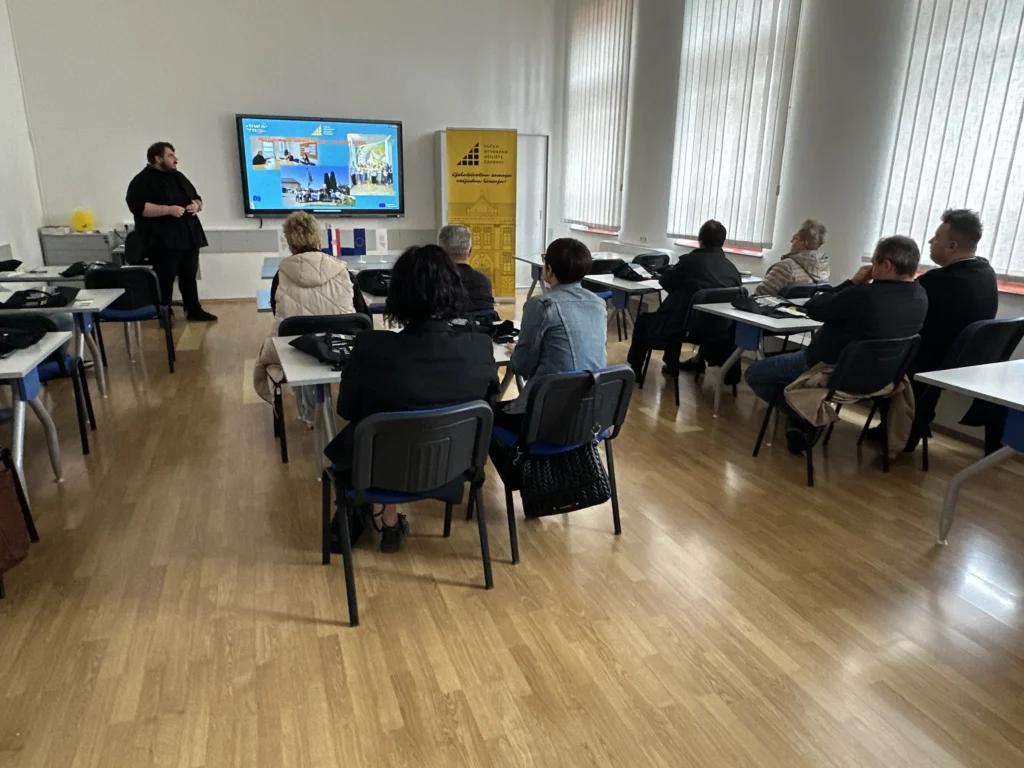
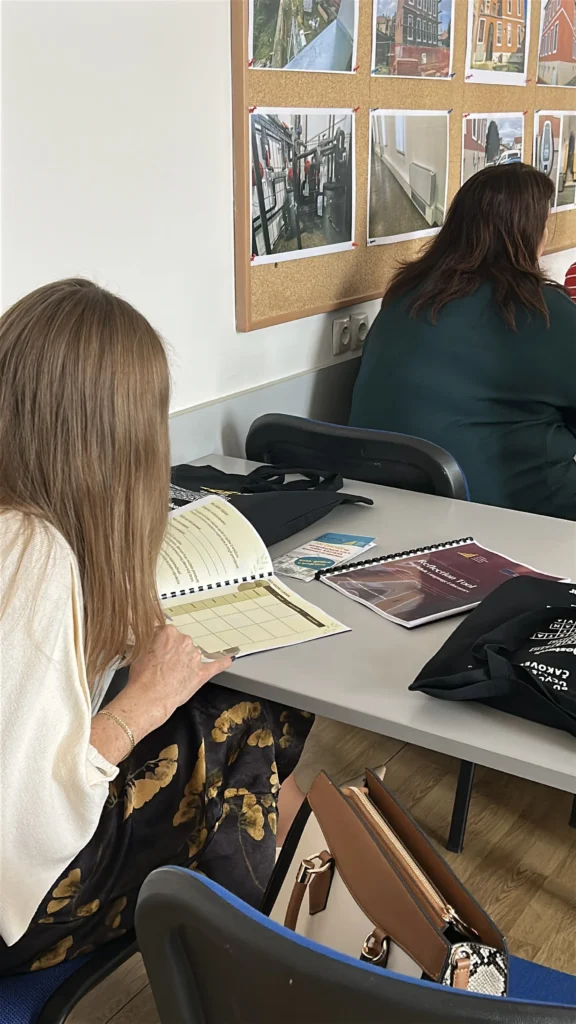
On Monday, 12 October 2026, Public Open University Čakovec marked Erasmus Days (#ErasmusDays), an international initiative celebrating the opportunities, experiences and achievements of the Erasmus+ programme across Europe and beyond. As part of the tenth edition of the initiative, the institution presented its European projects and activities to an audience of around twenty participants interested in international cooperation and adult education.
The event, entitled “POU Čakovec on the European Map: All About Our KA1 and KA2 Erasmus+ Projects”, offered an opportunity to review the results achieved in 2026, present new educational resources developed from experiences gained through European mobility activities, and introduce four new Erasmus+ projects.
The event was opened by the institution’s Director, Mario Zamuda, who recalled that POU Čakovec had participated in its first Erasmus+ project in 2016. Over ten years of international cooperation, the institution has taken part in more than 30 European projects and has continuously used the knowledge and experience gained to develop and modernise its work. European projects contribute not only to staff professional development and institutional capacity building, but also to improving educational programmes and teaching methods and modernising learning spaces and conditions.
More than €2.4 million in project value in 2026
Ivica Jeđud outlined the scope of the institution’s international cooperation and project activities, presenting results that demonstrate its continued European engagement. During 2026, POU Čakovec is involved in 12 Erasmus+ projects under Key Action 2 (KA2), working with 38 distinct partner organisations from 18 European countries. The combined value of Erasmus+ projects completed, ongoing or commencing in 2026 exceeds €2.4 million.
Alongside international cooperation projects, the institution continues to pursue the objectives of its Erasmus+ accreditation in adult education, which supports ongoing professional development for its staff at European educational institutions. Ten individual mobilities were undertaken in 2026 under two KA121 projects, involving job shadowing and training courses in Valencia, Nykøbing Falster, Berlin, Ghent and Bled. Jana Bračko discussed these mobilities and their contribution to the accreditation objectives, highlighting the importance of applying the experience gained in the institution’s everyday work.

Turning European experience into new teaching methods and practical handbooks
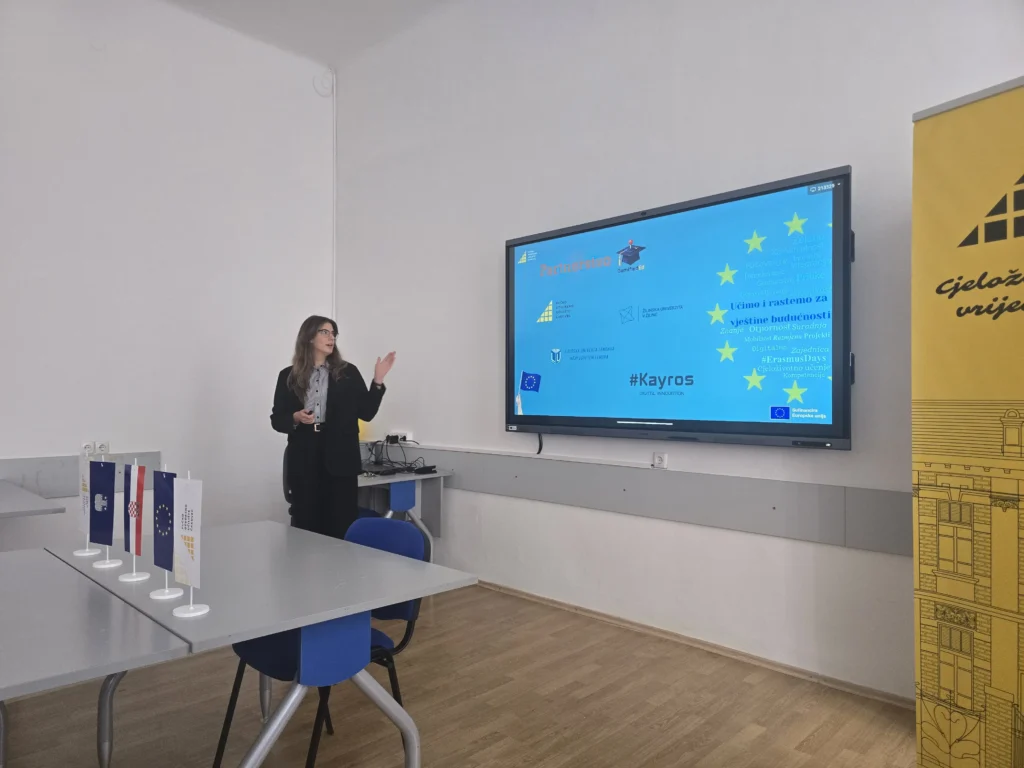
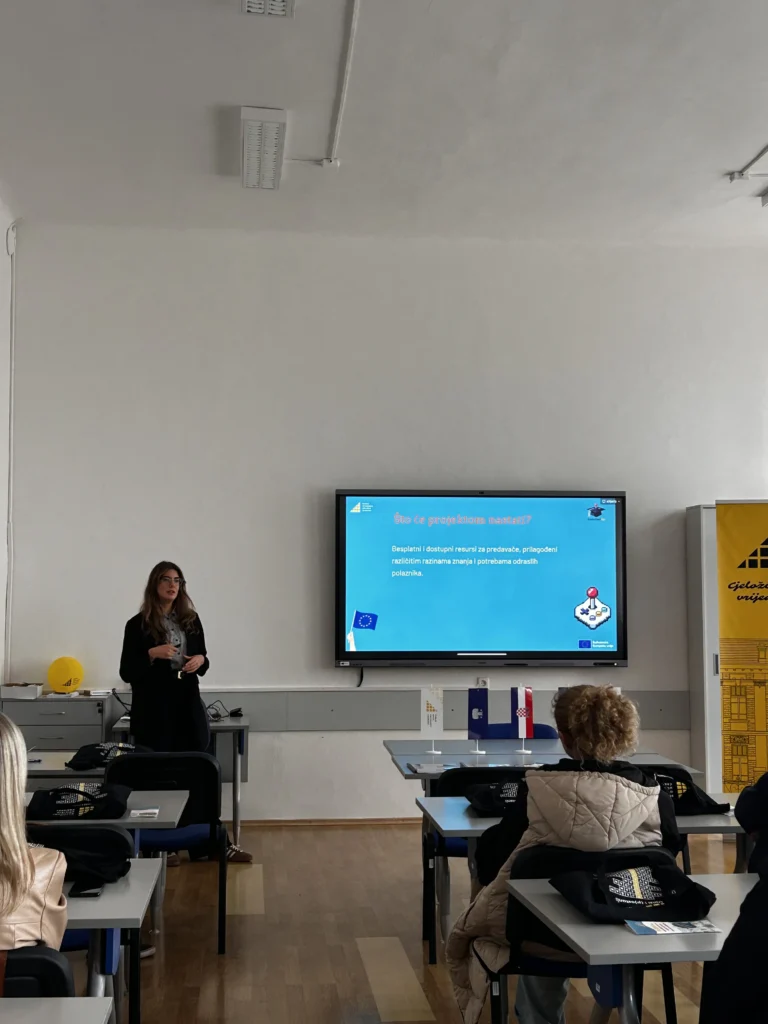
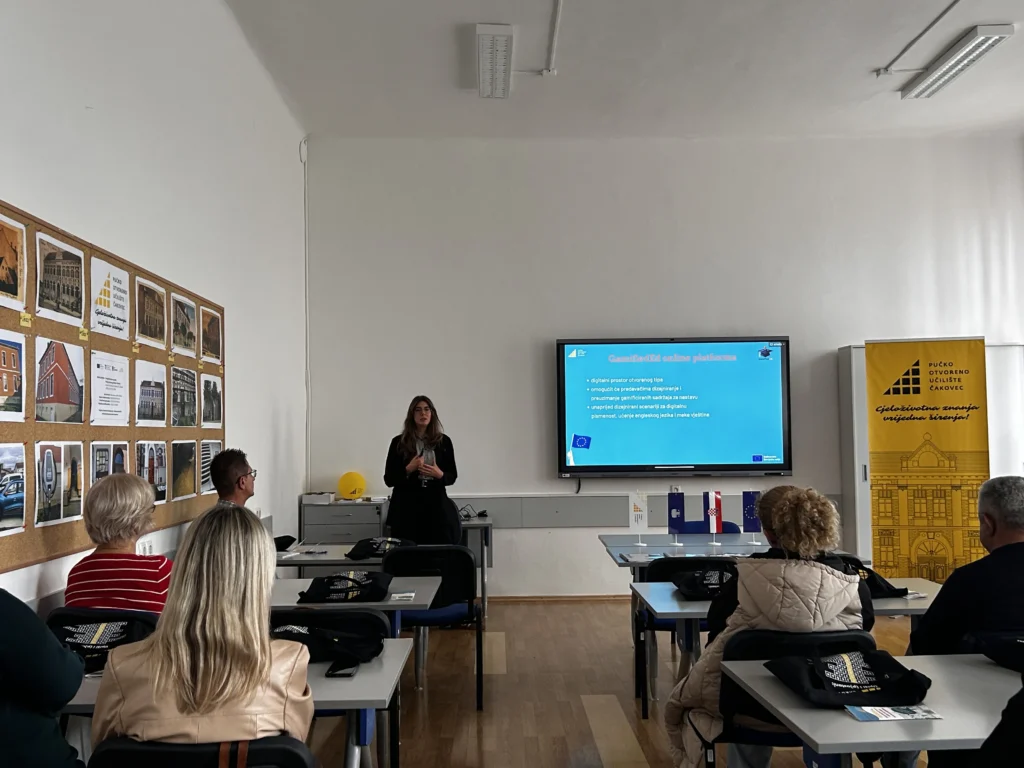
Particular attention was given to GamifiedEd, a project coordinated by POU Čakovec and presented by Andrea Štefić. The project aims to modernise adult education through gamification, using game elements in teaching activities to increase adult learners’ motivation and make learning more engaging and accessible. Participants were introduced to the Handbook for Gamification-Based Teaching, which combines theoretical foundations with practical teaching modules and ready-to-use materials. The project is also developing written and video tutorials for digital tools and an online platform with educational resources for digital literacy, English language learning and soft skills development.
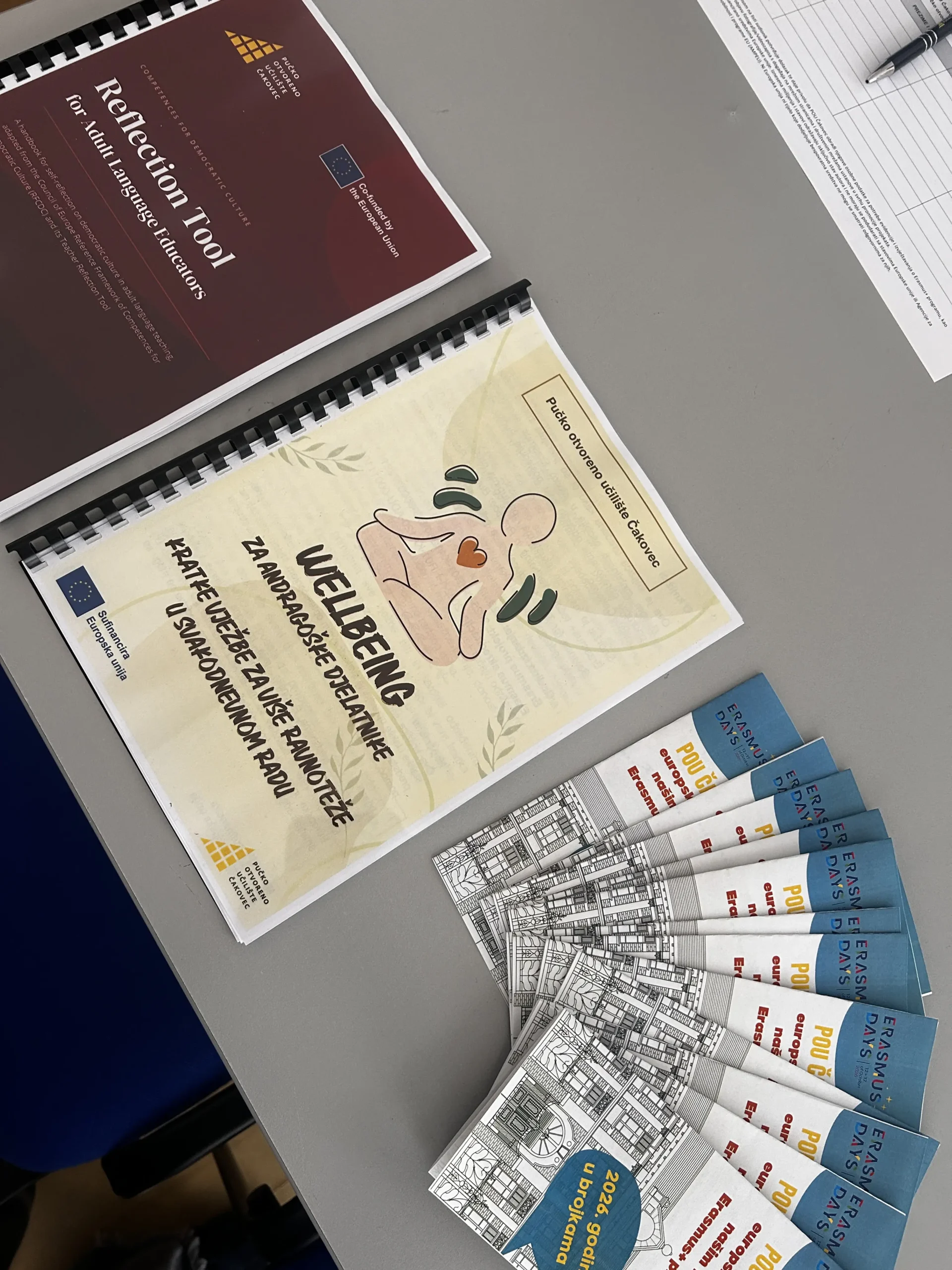
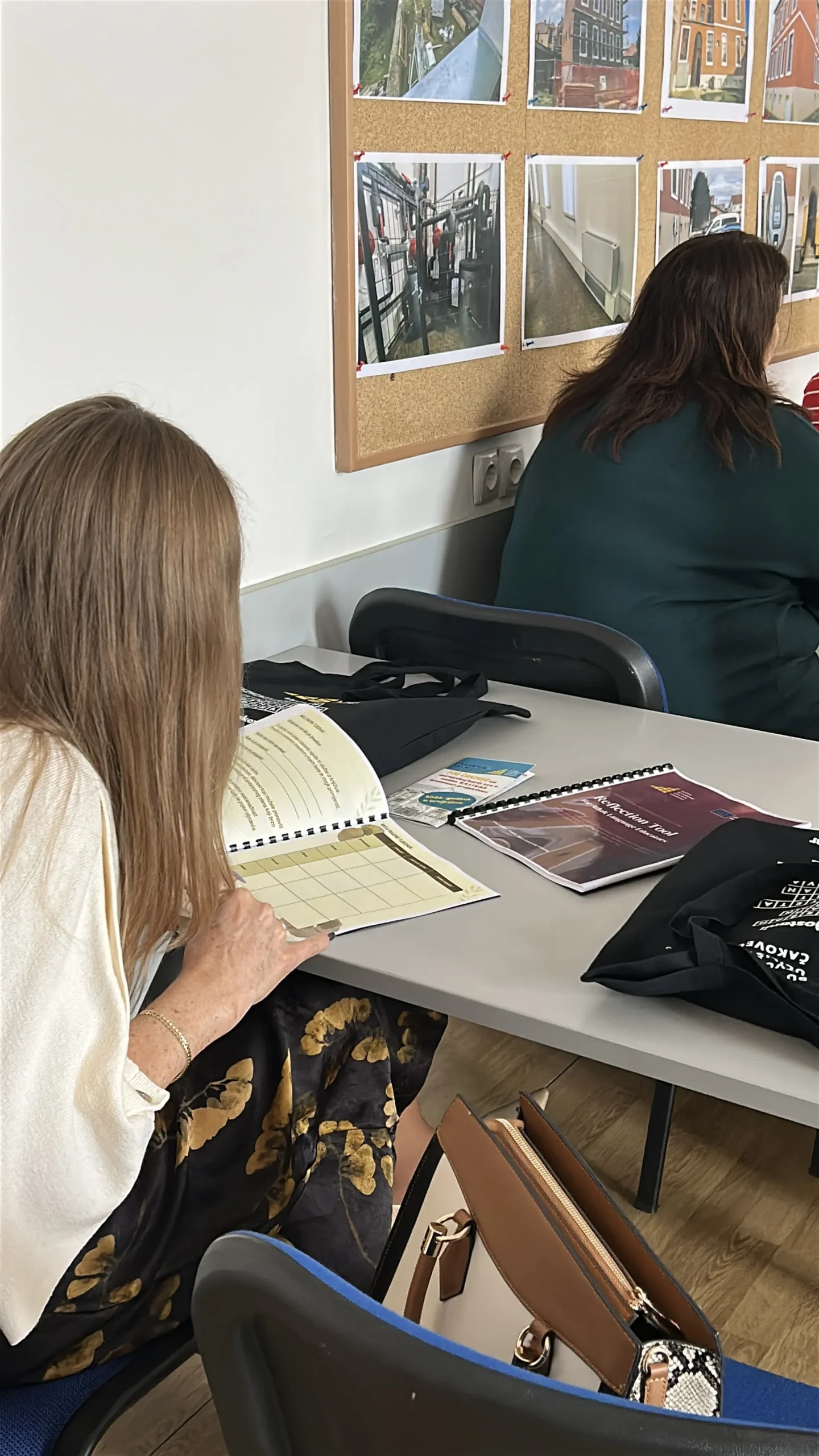
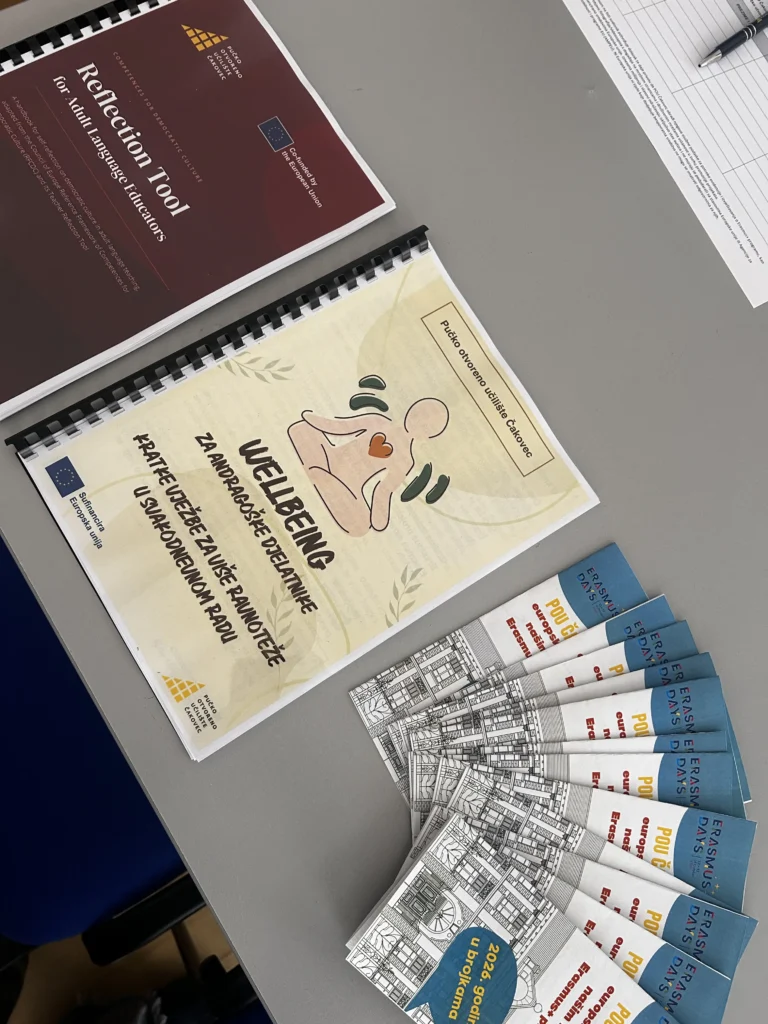
Another important part of the event was the presentation of two handbooks created following staff participation in Erasmus+ mobilities, in line with the objectives of the institution’s Erasmus+ accreditation. “Wellbeing za andragoške djelatnike” (Wellbeing for Adult Education Professionals), presented by Jana Bračko, draws on experience gained during a training course in Bled. It contains simple exercises lasting between one and five minutes, tailored to real-life situations encountered by teachers and other adult education professionals. The exercises encourage awareness of personal needs, management of everyday demands, short breaks and a better sense of balance during the working day; some can also be adapted for use with adult learners.
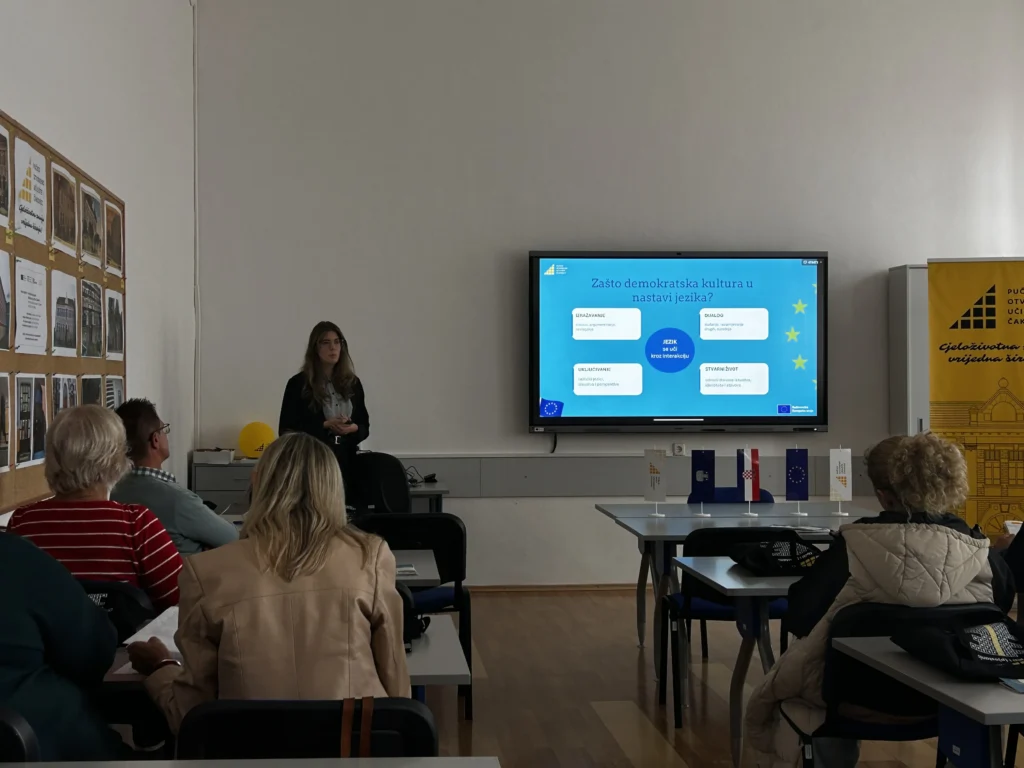
Andrea Štefić also presented the Reflection Tool for Adult Language Educators, developed following professional training in Ghent. Drawing on the Council of Europe’s Reference Framework of Competences for Democratic Culture, the handbook has been adapted to the particular characteristics of teaching languages to adults. It encourages educators to reflect on their teaching practice, learner participation, open dialogue and respect for different perspectives. It includes five thematic modules, classroom scenarios, self-assessment questions and practical templates for planning and improving learning activities. Written in English, the handbook is intended to be accessible and relevant to teachers and adult education institutions across Europe.
Both handbooks demonstrate how knowledge gained during Erasmus+ mobilities can be translated into professional and educational resources, extending the benefits of international cooperation beyond the staff members who directly participated in the training. Links to both resources are provided at the end of this article.
Four new Erasmus+ projects supporting the development of adult education
To conclude the event, Ivica Jeđud presented four new Erasmus+ projects approved in 2026, with a combined value of €770,000, in which POU Čakovec is a partner organisation. The projects address different areas of adult education and focus on inclusive, innovative and practical approaches to learning.
BARVALO focuses on improving financial literacy among adults in Roma communities, particularly personal financial management, saving and recognising financial risks. AI4ID will develop educational and rehabilitation resources using virtual reality and artificial intelligence, enabling adults with intellectual disabilities to practise skills for more independent daily living. RENEW will combine digital and green skills development for retirees through podcast production, intergenerational learning and the exchange of knowledge about sustainable lifestyles. NATUREscapes will explore how nature sounds can be used in adult education, developing digital tools and educational materials to address digital fatigue, reduce stress and support concentration during learning.
The variety of these new projects illustrates the breadth of POU Čakovec’s international cooperation, ranging from social inclusion and digital transformation to sustainable development and improved learning quality.
The Erasmus Days event demonstrated once again how international cooperation and participation in European projects contribute to the continuous development of Public Open University Čakovec. Exchanges with European partners, staff training and the development of educational resources and tools help the institution adapt its programmes and methods to adult learners’ needs and contemporary educational challenges.
POU Čakovec thanks all event participants, project partners and collaborators for their support and looks forward to further strengthening international partnerships and creating new lifelong learning opportunities in Međimurje and beyond.
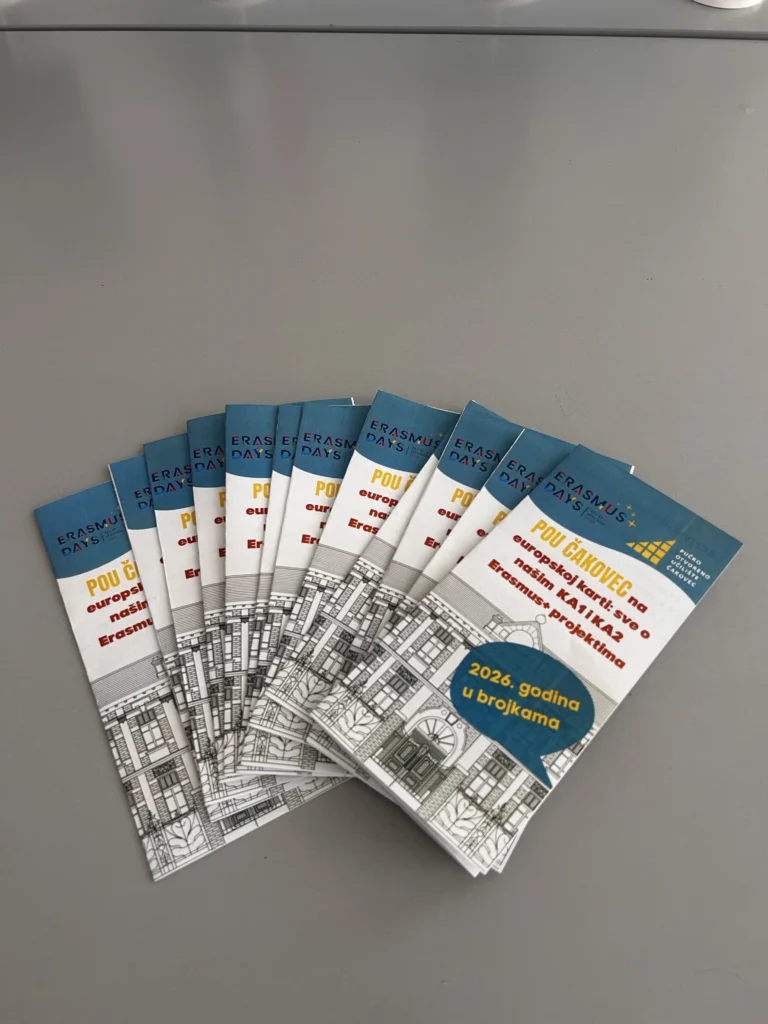
The handbooks presented during Erasmus Days are available to download free of charge from the EPALE Resource Centre:

Funded by the European Union. Views and opinions expressed are however those of the author(s) only and do not necessarily reflect those of the European Union or Agency for Mobility and EU Programmes (AMPEU). Neither the European Union nor the granting authority can be held responsible for them.