

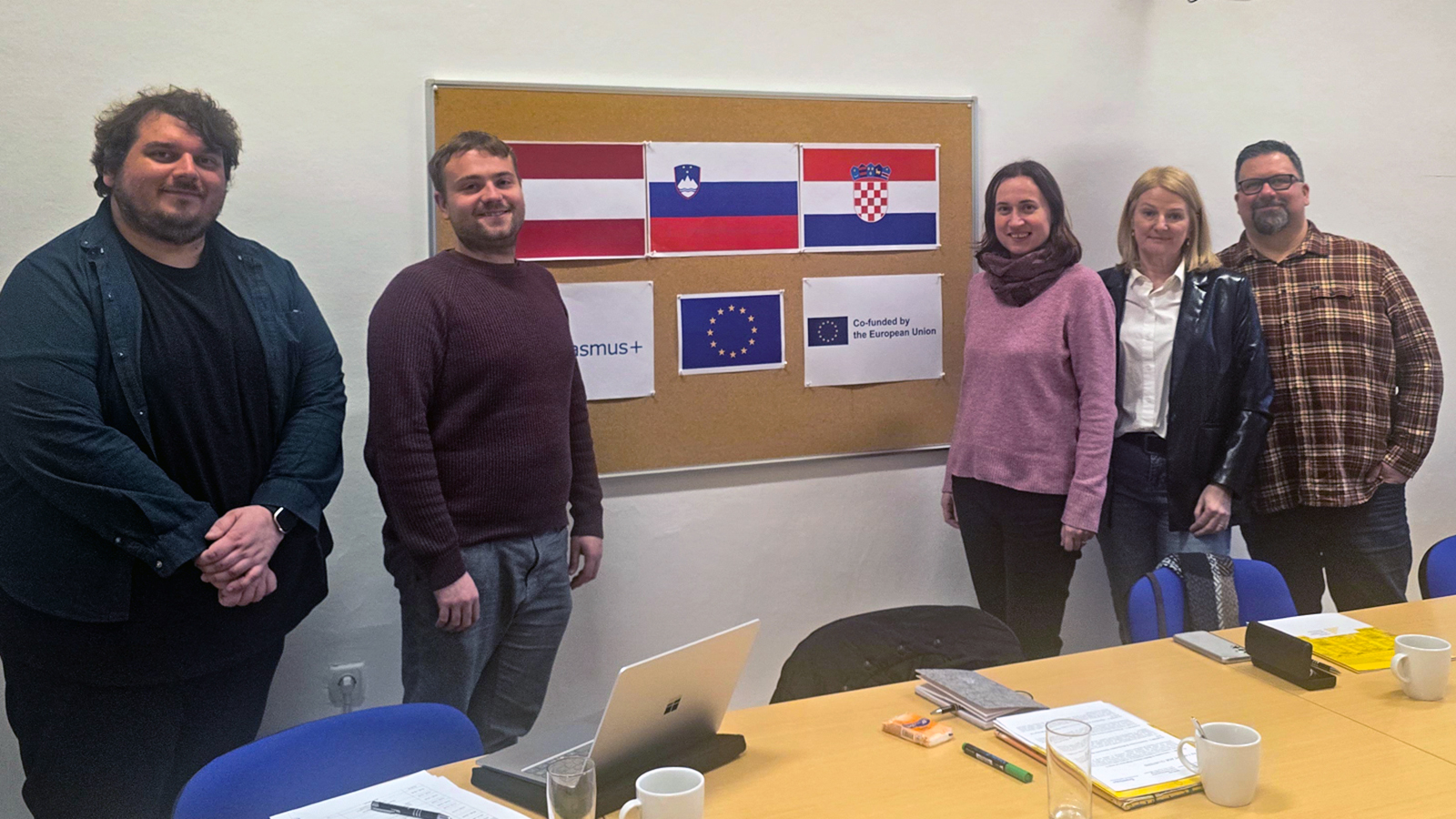
The Erasmus+ project SMART AGE officially launched with a two-day kick-off meeting, discussing the initial steps of adapting the new DigComp 3.0 framework to raise the media literacy of older adults.
Bridging the digital divide in the age of AI
Last week marked the official launch of SMART AGE (Seniors’ Media Awareness & Resilience in the Digital Age), an Erasmus+ cooperation partnership in the field of adult education designed to equip older adults with the tools to navigate a digital landscape increasingly dominated by Artificial Intelligence (AI).
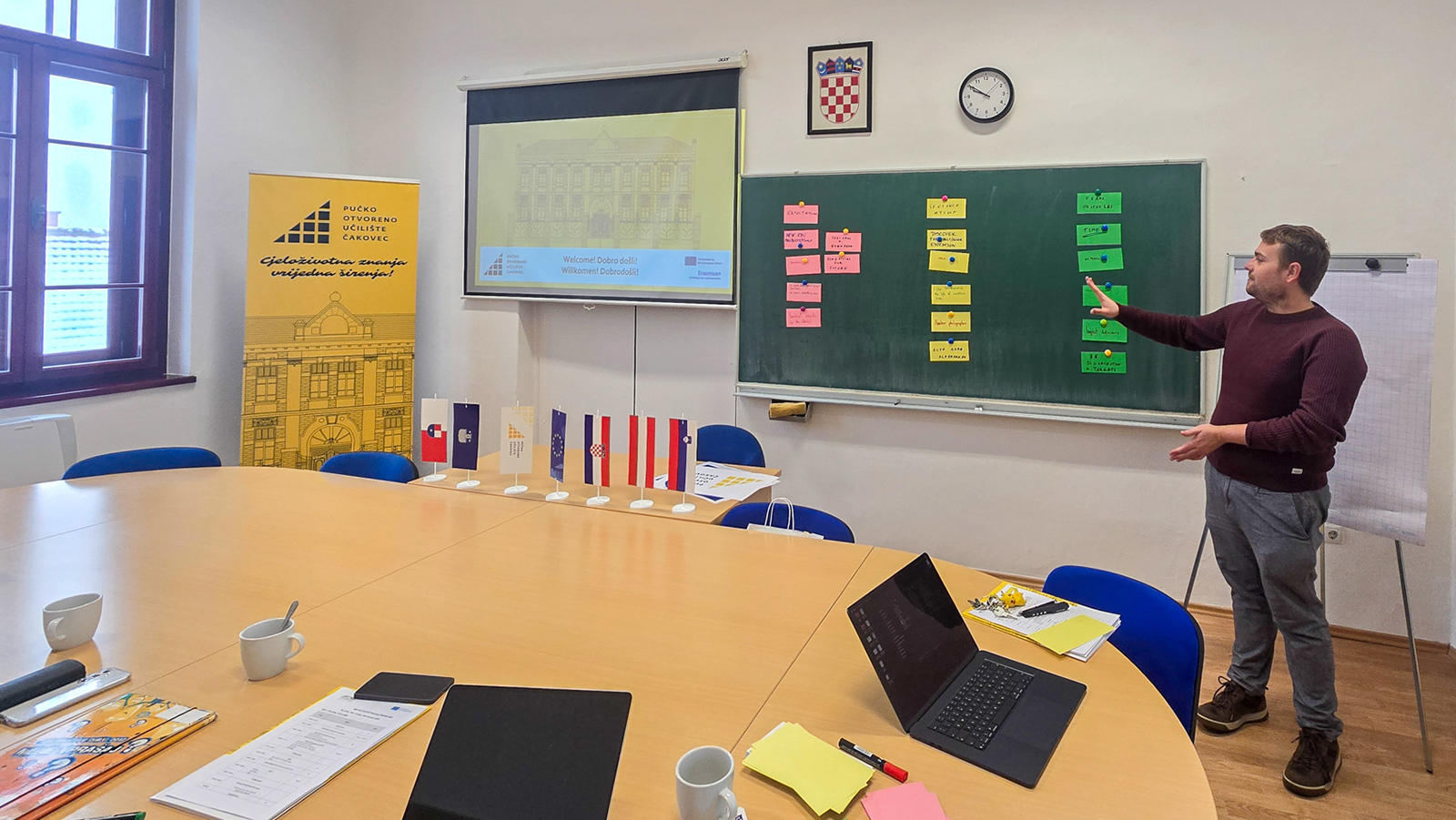
The project began with a dynamic two-day kick-off meeting. The first day was hosted in Čakovec (Croatia), followed by a second day of sessions in Ormož (Slovenia). The consortium is led by Bildungshaus Retzhof (Austria), partnering with Pučko otvoreno učilište Čakovec (Croatia) and Ljudska univerza Ormož (Slovenia).
While the project aims to produce tangible results – including a micro-credential curriculum and an open-access online course – the core innovation of SMART AGE lies in its pedagogical engine: the practical adaptation of the European Digital Competence Framework for Citizens (DigComp 3.0).
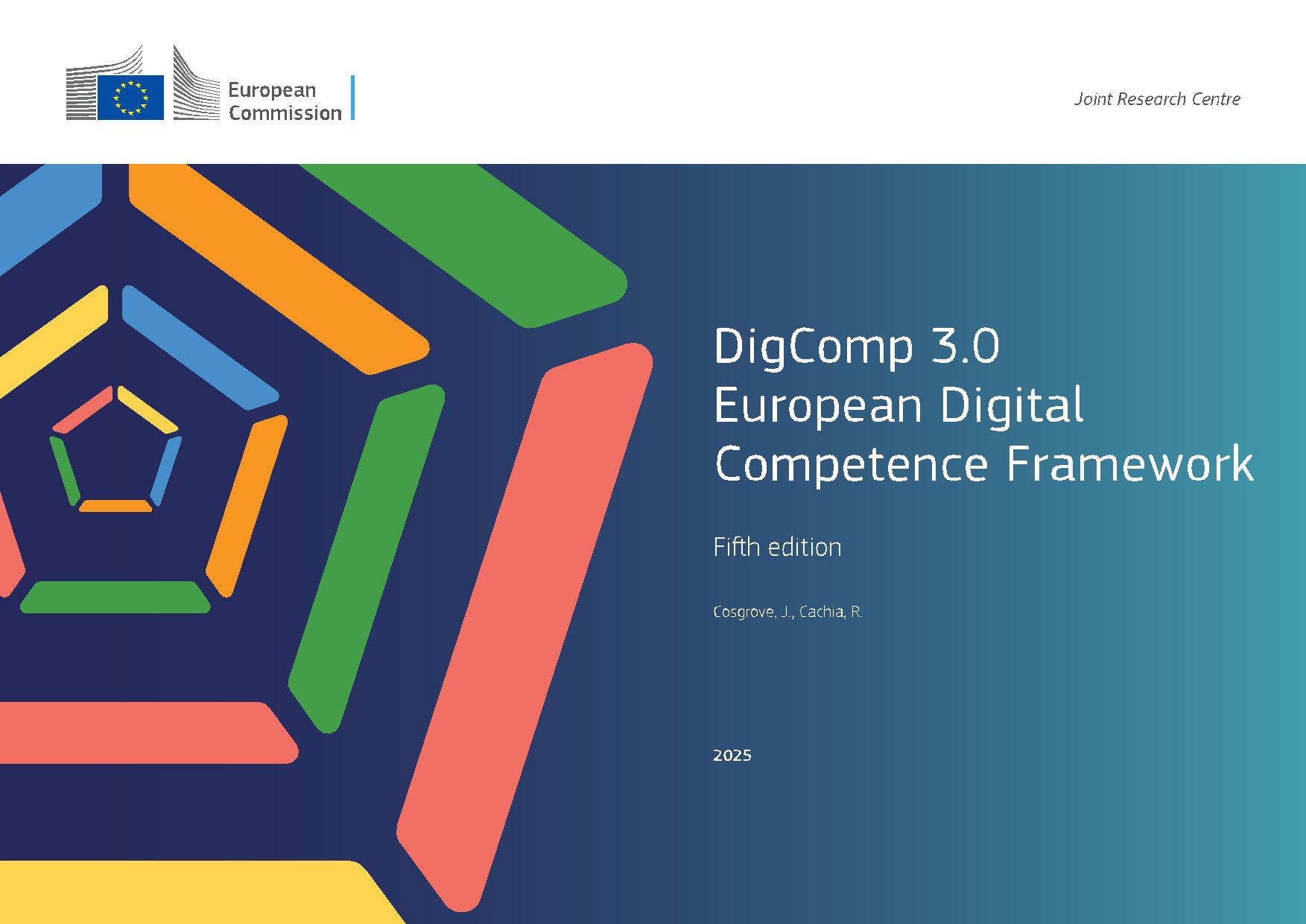
The pedagogical shift: From DigComp 2.2 to 3.0
For the adult education community, the transition to the DigComp 3.0 framework represents a critical evolution in how we define “digital literacy” in the age of AI, especially for vulnerable groups like seniors.
In the previous version, DigComp 2.2, knowledge regarding Artificial Intelligence was introduced primarily as a contextual addition. It featured Annex 2, specifically titled “Citizens interacting with AI systems”, which provided examples of knowledge, skills, and attitudes. While this was a significant step forward, AI literacy was often viewed as a supplementary layer to core digital skills.
The SMART AGE project embraces the paradigm shift presented by DigComp 3.0.
In this updated framework, AI is no longer relegated to an annex or a specific “advanced” module. Instead, it is woven into the fabric of everyday digital interaction. Our curriculum development analysis reveals that AI competence now features explicitly or implicitly across the large majority of DigComp competences.
Specifically, of the 523 learning outcomes in DigComp 3.0, 13% are AI-explicit and 63% are AI-implicit, meaning that over 75% of the framework is directly relevant to AI systems. This distinction between explicit and implicit is vital for our educational approach:
- AI-explicit: Competences where AI systems are the primary subject (e.g., using a generative AI tool to create content).
- AI-implicit: Competences where AI is present in the background or as an option. This includes:
- Alternative tools: Deciding whether to use an AI system versus a standard digital technology for a task.
- Embedded functionality: Using collaboration tools that have AI features (like automated note-taking) built-in.
- Operational understanding: Knowing how to prompt, re-draft, and check the accuracy of AI outputs.
- Ethical implications: Understanding the environmental impact, transparency, and privacy concerns of using these systems.
Why this matters for seniors in rural areas
For our target demographic – seniors living in rural areas – the SMART AGE project moves beyond standard technical instruction. We are shifting the emphasis from simple “technical information handling” to critical understanding, explicitly recognizing older adults’ lived experience as a cognitive resource.
Based on the 10 thematic clusters that will be developed as part of the project, the SMART AGE curriculum helps seniors transition from “tool dependence” to “judgement-based resistance”:
- Disinformation & emotional triggers: Rather than just teaching how to fact-check, we focus on manipulation awareness. Seniors learn to recognize the specific emotional triggers and persuasive techniques designed to bypass critical thinking, fostering a cognitive resilience that goes beyond technical detection tools.
- AI-generated content awareness: We shift the learning focus from “content production” to critical interpretation. In an era of deepfakes and synthetic media, the priority is to equip seniors with the skills to distinguish between authentic and AI-generated reality.
- Algorithmic awareness: It is not enough to browse; seniors must understand the invisible filtering that shapes their online experience. We teach how personal data is used to curate echo chambers, enabling them to recognize when their worldview is being algorithmically manipulated.
- Psychological defense against scams: Moving beyond basic password security, we address the psychological mechanics of scams. By understanding how authority, urgency, and fear are weaponized, seniors can identify the intent behind a message, regardless of the technology used to deliver it.
By acknowledging that AI is ubiquitous, the SMART AGE project moves beyond basic functional skills (how to use a device) to critical resilience (how to understand the machine logic behind the screen). Ultimately, this shift transforms the learner from a passive user of technology into a resilient, informed digital citizen capable of participating fully in democratic life.
Next steps and call for experts
Led by Pučko otvoreno učilište Čakovec, the partners are currently developing the Micro-credential Curriculum. This work involves “translating” these complex, high-level DigComp 3.0 outcomes into accessible clusters of 10 learning modules tailored to older learners.
We are inviting external experts to contribute to our quality assurance process.
If you have expertise in adult education, digital frameworks, or media literacy and are interested in peer-reviewing our 10 identified thematic clusters and their selected learning outcomes, please contact us at project@pou-cakovec.hr. Your feedback will help ensure that our curriculum remains rigorous, relevant, and impactful for seniors across Europe.

Funded by the European Union. Views and opinions expressed are however those of the author(s) only and do not necessarily reflect those of the European Union and the OeAD-GmbH. Neither the European Union nor the granting authority can be held responsible for them.
